New Zealand bill proposes pre-registration GST deductions, a non-resident registration choice and filing changes
This change is proposed and is not law. The rules below describe what would change if it is adopted.
- Jurisdiction
- New Zealand
- Tax
- GST
- Change type
- Registration
- Status
- Proposed
- Impact
- Watch
- Announced
- 10 September 2026
- Effective
- 1 April 2027
- Authority
- Inland Revenue (Tax Policy), New Zealand
- Systems
- ERP, Tax engine, Reporting
- Verified
- Fetched from official source · high confidence
Newly GST-registered businesses, non-residents making zero-rated services supplies to non-residents, and six-monthly filers who no longer qualify for six-monthly filing.
No action yet - monitor passage; review treatment of pre-registration purchases and non-resident registration status ahead of 1 April 2027 / Royal assent.
ERPTax engineReporting
The same Bill proposes (clauses 146, 157, 159-163 and 172) new rules allowing GST deductions for goods and services acquired before GST registration once they start being used to make taxable supplies, with a limit based on value at first use and a safe harbour for recent acquisitions, replacing the adjustment-based approach, from 1 April 2027. The Bill also proposes, effective the day after Royal assent, that non-residents making zero-rated services supplies to non-residents may choose not to register for GST (clause 170), and that the Commissioner may move a registered person from six-monthly filing to a two-month taxable period (clause 153).
What changed in detail
This is a bill and not law. The Taxation (Annual Rates for 2026-27, FBT Simplification, Foreign Investment Funds, and Remedial Measures) Bill proposes several GST changes.
Clauses 146, 157, 159 to 163 and 172 would introduce new rules allowing GST deductions for goods and services acquired before GST registration once they start being used to make taxable supplies. The deduction would be limited by value at first use, with a safe harbour for recent acquisitions, and would replace the adjustment-based approach from 1 April 2027.
The Bill also proposes, effective the day after Royal assent, that non-residents making zero-rated services supplies to non-residents may choose not to register for GST (clause 170), and that the Commissioner may move a registered person from six-monthly filing to a two-month taxable period where the person no longer meets the six-monthly eligibility conditions and has not applied to change in time (clause 153).
What it means
Nothing applies yet, and clauses may be amended before enactment. If enacted, the pre-registration rules would change how start-up costs are recovered, so businesses about to register may want to wait for the final text before deciding on timing. The filing change is a power of the Commissioner, limited to persons who no longer qualify for six-monthly filing and have not applied to change, so six-monthly filers whose turnover has grown should check their eligibility.
Proof
The proposed amendments would introduce new rules for claiming GST deductions (input tax deductions) for goods and services acquired before a person becomes registered for GST.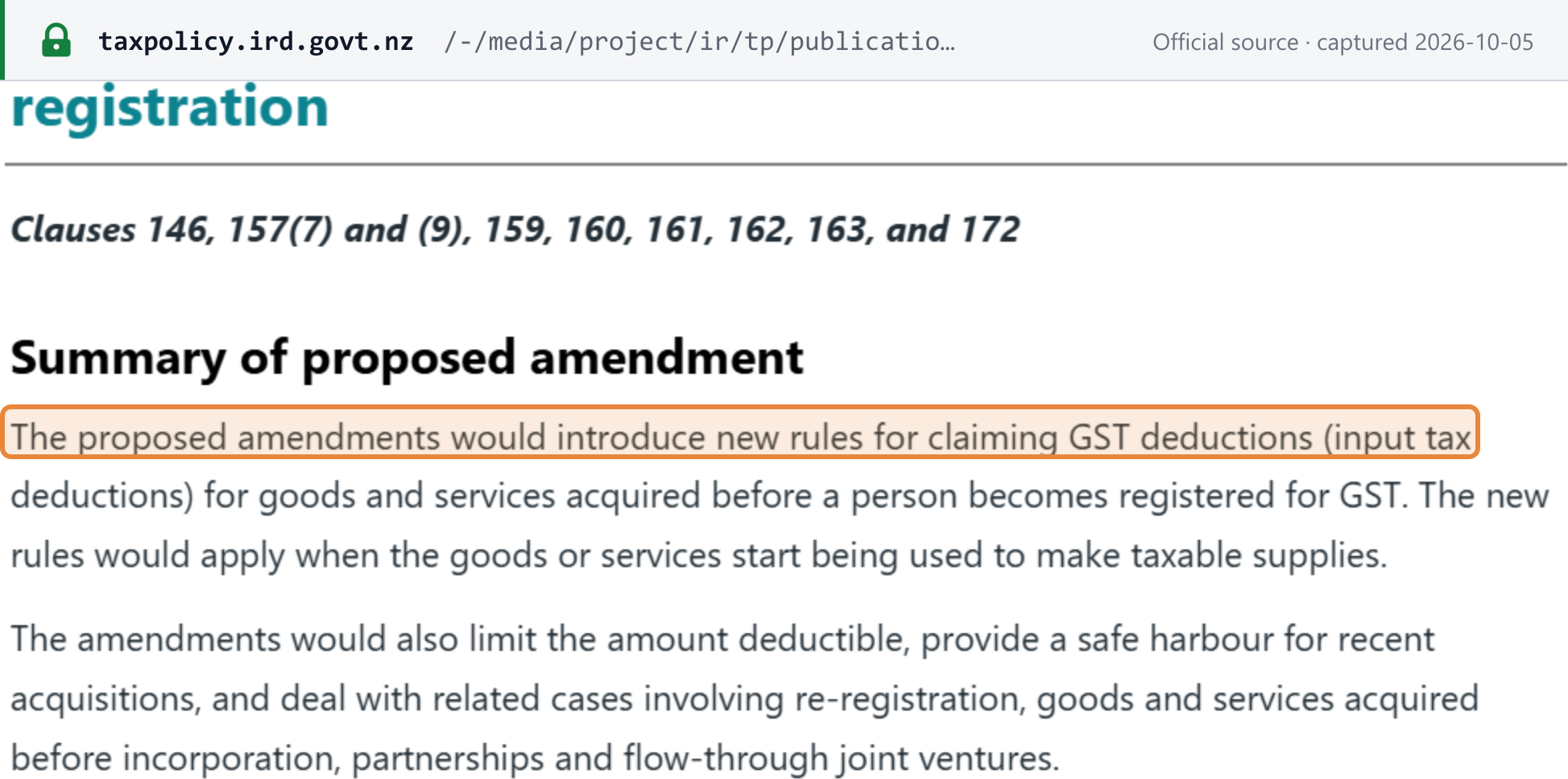 Source snapshot of the official page. Open full size ↗