· Abhilash John Philip · Guide · 4 min read
VIES: Your Complete Guide to EU VAT Number Validation
If you're doing business in Europe, VAT compliance is unavoidable. Here's everything you need to know about using the VAT Information Exchange System (VIES) effectively.
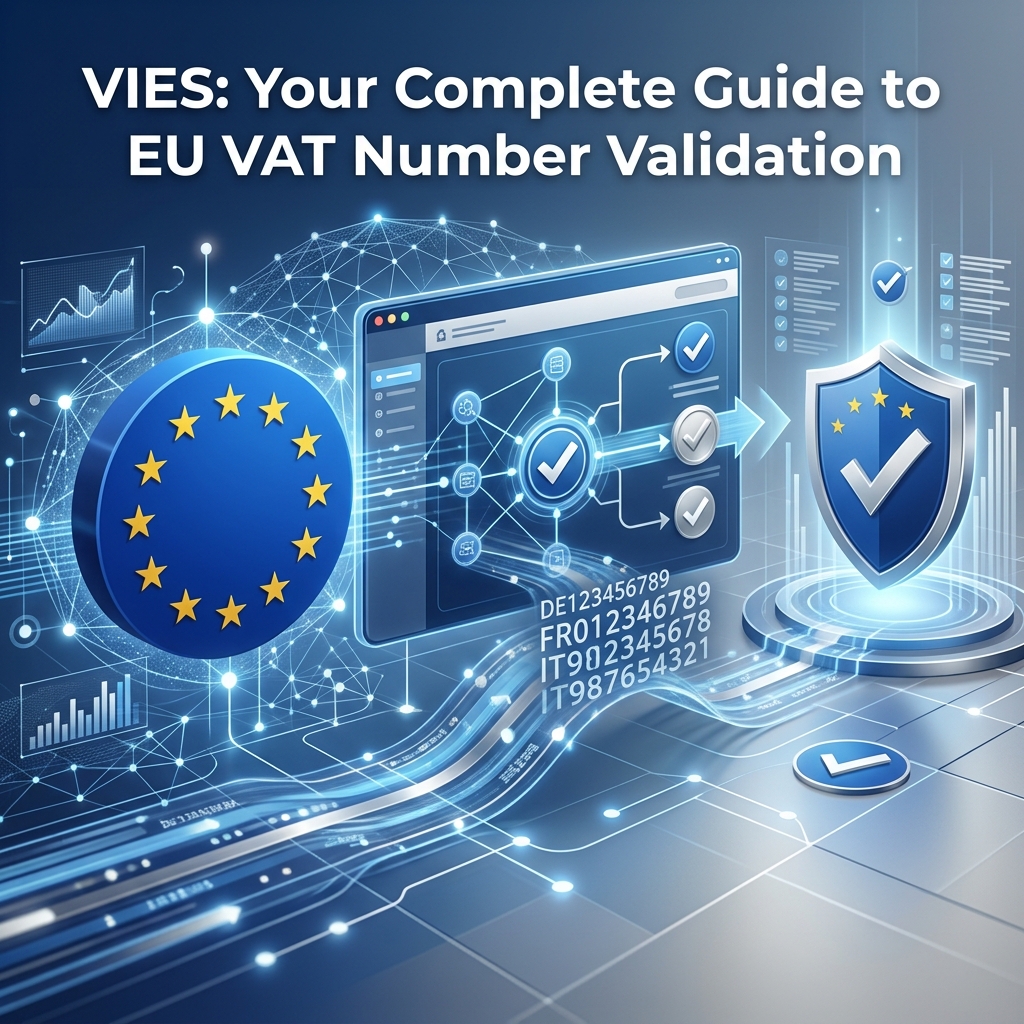
If you’re doing business in Europe, VAT compliance is unavoidable. While the process can feel complex and time-consuming, the VAT Information Exchange System (VIES) exists to make your life easier. Here’s everything you need to know about using VIES effectively.
What Is VIES?
VIES is a search engine operated by the European Commission that allows businesses to validate VAT numbers across EU member states. It’s crucial to understand that VIES is not a database itself—rather, it retrieves data in real-time from national VAT databases whenever you perform a search.
This distinction matters because it explains some of the system’s limitations, which we’ll explore later.
Why VIES Matters for Your Business
When trading across EU borders, you’re required to charge the correct amount of VAT based on your customer’s location and business status. Validating VAT numbers through VIES helps you:
- Confirm whether your customer is a registered business eligible for Reverse Charge
- Avoid incorrectly charging VAT to B2B customers
- Maintain compliance with cross-border VAT regulations
- Protect yourself during tax audits by proving due diligence
How to Use VIES
VIES is accessible in 23 EU languages and offers two validation methods:
Manual Validation: Use the VAT VIES validation tool on the European Commission’s website to check individual VAT numbers.
API Integration: Access publicly available APIs to automate VAT validation at scale, integrating the checks directly into your checkout or invoicing workflow.
Both methods retrieve the same real-time data from national tax authorities, so the choice depends on your business volume and technical capabilities.
The Limitations You Should Know
While VIES is invaluable, it’s not perfect. Understanding its limitations helps you avoid costly mistakes:
1. Delayed Updates
VAT numbers may not appear in VIES immediately after registration or may remain in the system after cancellation. This lag can result in false negatives—valid VAT numbers that don’t show up in searches, or invalid numbers that haven’t been removed yet.
2. Incomplete Coverage
Not all valid EU VAT numbers appear in VIES. Some countries, including Spain, only make VAT numbers registered for cross-border trade searchable in the system. This means a legitimate business might have a valid VAT number that simply isn’t available through VIES.
3. Frequent Downtime
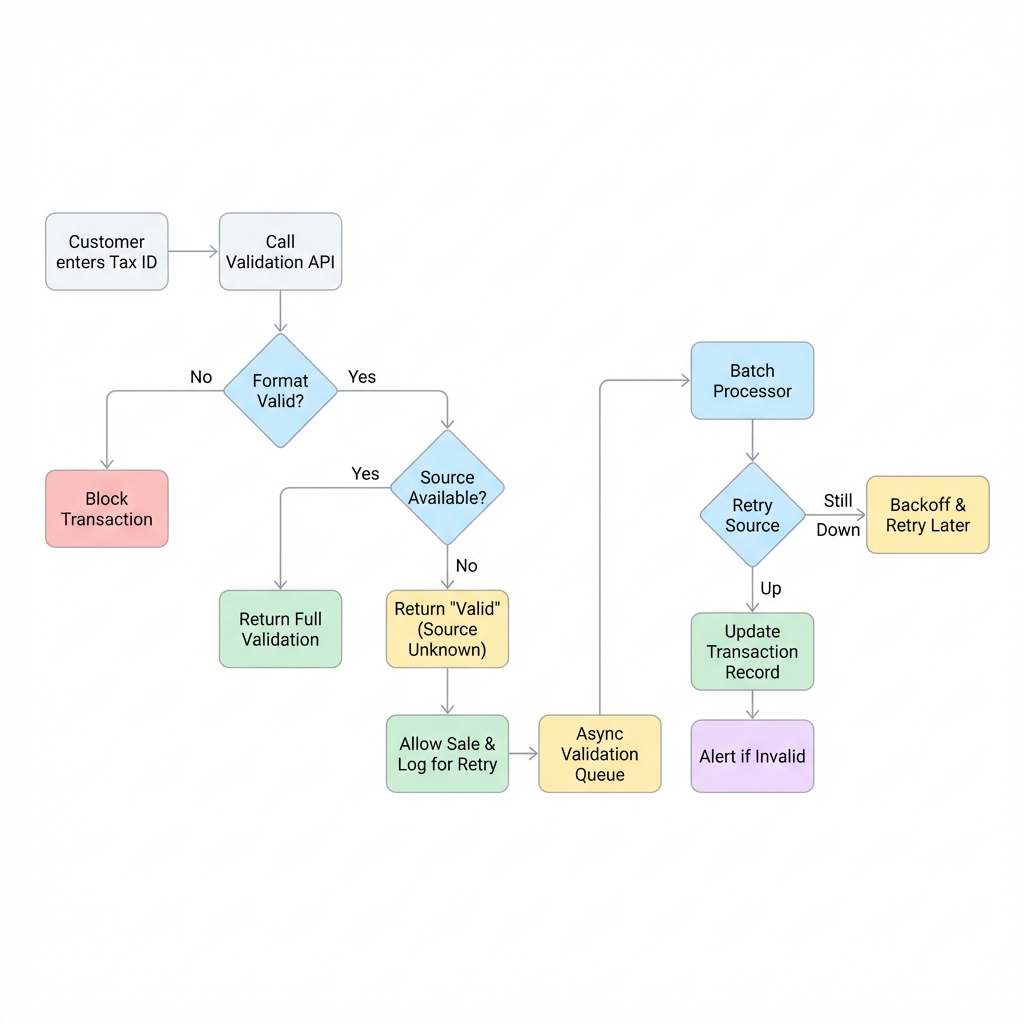
VIES experiences regular downtime, particularly during peak periods like VAT filing deadlines and year-end closing. Downtime patterns vary by country, and a database being offline doesn’t mean VAT numbers from that country are invalid—it just means you can’t verify them at that moment. You can check the real-time status of each country’s database on the EU Commission website.
4. API Rate Limits
While VIES APIs are publicly available, they impose limits on concurrent requests. For high-volume businesses, these restrictions can be problematic and may require workarounds or alternative solutions.
5. Additional National Requirements
Some member states require extra registration or authorization for certain VAT purposes beyond what VIES validates. This is especially important to consider if you’re new to cross-border trading in specific countries.
Best Practices for VAT Validation
VIES is a powerful tool, but it shouldn’t be your only line of defense. Follow these practices to ensure compliance:
Never Rely Solely on VIES: If validation fails, don’t automatically assume the VAT number is invalid. The issue could be system downtime or delayed updates.
Request Additional Documentation: When VIES doesn’t return results, ask your customer for alternative proof of VAT registration, such as a certificate from their national tax authority.
Keep Records: Document your validation attempts, including dates and results. This demonstrates due diligence during audits, even if the validation failed due to system issues.
Contact National Authorities: If you can’t validate a VAT number through VIES, reach out to the relevant national tax authority directly. You can find a list of national tax authorities on the EU website.
Remember the Bigger Picture: VAT validation is just one component of compliance. Ensure you’re also charging correct VAT rates, maintaining proper documentation, and submitting accurate returns on time.
The Bottom Line
VIES simplifies cross-border VAT validation in Europe, but it’s not infallible. Understanding its limitations and implementing robust validation practices protects your business from compliance issues and financial penalties.
Treat VIES as a valuable first step in your validation process, but always be prepared to verify through alternative channels when the system falls short.
Need help automating VAT validation across multiple countries? Lookuptax provides reliable API-based validation with built-in fallbacks for system downtime. Try it free today.

About the Author
Abhilash John Philip is the co-founder of Lookuptax. He has extensive experience building scalable API infrastructure for fintechs and navigating global tax compliance regulations for digital sales.
Connect on LinkedIn