Armenia switches VAT foreign-currency conversion to the previous business day's rate
This page records one dated change. For the rules in Armenia as they stand today, see the Armenia guide →
- Jurisdiction
- Armenia
- Tax
- VAT
- Change type
- Invoice rules
- Status
- In force
- Impact
- Action required
- Announced
- 3 June 2026
- Effective
- 1 July 2026
- Instrument
- AM-HO-234-N-2026
- Authority
- ARLIS – Armenian Legal Information System (arlis.am)
- Systems
- ERP, Invoicing, Tax engine
- Verified
- Fetched from official source · high confidence
Any Armenian VAT payer invoicing in a foreign currency for the supply of goods, work or services, and businesses moving goods to or from another EAEU member state. Any invoicing or tax engine that hard-codes the same-day Central Bank rate needs to be repointed.
Repoint Armenian foreign-currency conversion in your invoicing and tax engine to the Central Bank rate published on the PREVIOUS business day, not the same day, for supplies from 1 July 2026. The old Article 16.1(2) rule keyed to the rate published up to 16:00 on the day no longer applies.
ERPInvoicingTax engine
Armenia’s Law No. HO-234-N restates Article 16 of the Tax Code on the accounting of transactions denominated in foreign currency, and amends Article 16.1(2) so that the average exchange rate used to determine the taxable base is the rate published by the Central Bank of Armenia on the previous business day, replacing the reference to the average rate published up to 16:00 on the given day. The restated Article 16 continues to key the rate for goods entering or leaving Armenian territory to or from an EAEU member state to the rate published on the day the goods cross the state border, which this law does not change. The amendment takes effect on 1 July 2026.
What changed in detail
Armenia’s Law No. HO-234-N replaces Article 16 of the Tax Code on the accounting of transactions denominated in foreign currency, changing the default conversion rule used to determine the taxable base, income and acquisition cost for VAT and other tax purposes. For the supply of goods, the performance of work and the provision of services, and for goods entering or leaving Armenian territory to or from an EAEU member state, the average exchange rate to be used is the rate published by the Central Bank of Armenia for the previous business day rather than the same-day rate previously used. A corresponding change to Article 16.1(2) replaces the reference to the average rate published up to 16:00 on the given day with the rate published on the previous business day. The change took effect on 1 July 2026.
What it means
This looks like a small mechanical change but it touches every foreign-currency invoice, and it is easy to implement wrong because “previous business day” is not the same lookup as “today, before 16:00” under the old Article 16.1(2) rule. A system that simply moves its lookup back one calendar day rather than one business day will misprice invoices issued after a weekend or a public holiday. Because the rule also governs goods crossing the border to or from an EAEU member state, customs-linked VAT calculations need the same fix, not just sales invoicing. The change shares its effective date and its source law, HO-234-N, with Armenia’s VAT registration cure window — both provisions took effect 1 July 2026 out of the same act.
Proof
որպես տվյալ օրը Հայաստանի Հանրապետության կենտրոնական բանկի հրապարակած՝ արժութային շուկաներում ձևավորված միջին փոխարժեք, հիմք է ընդունվում Հայաստանի Հանրապետության կենտրոնական բանկի կողմից նախորդ աշխատանքային օրը հրապարակված միջին փոխարժեքըinstead of the average exchange rate formed in the currency markets and published by the Central Bank of the Republic of Armenia on the given day, the average exchange rate published by the Central Bank of the Republic of Armenia on the previous business day is taken as the basis
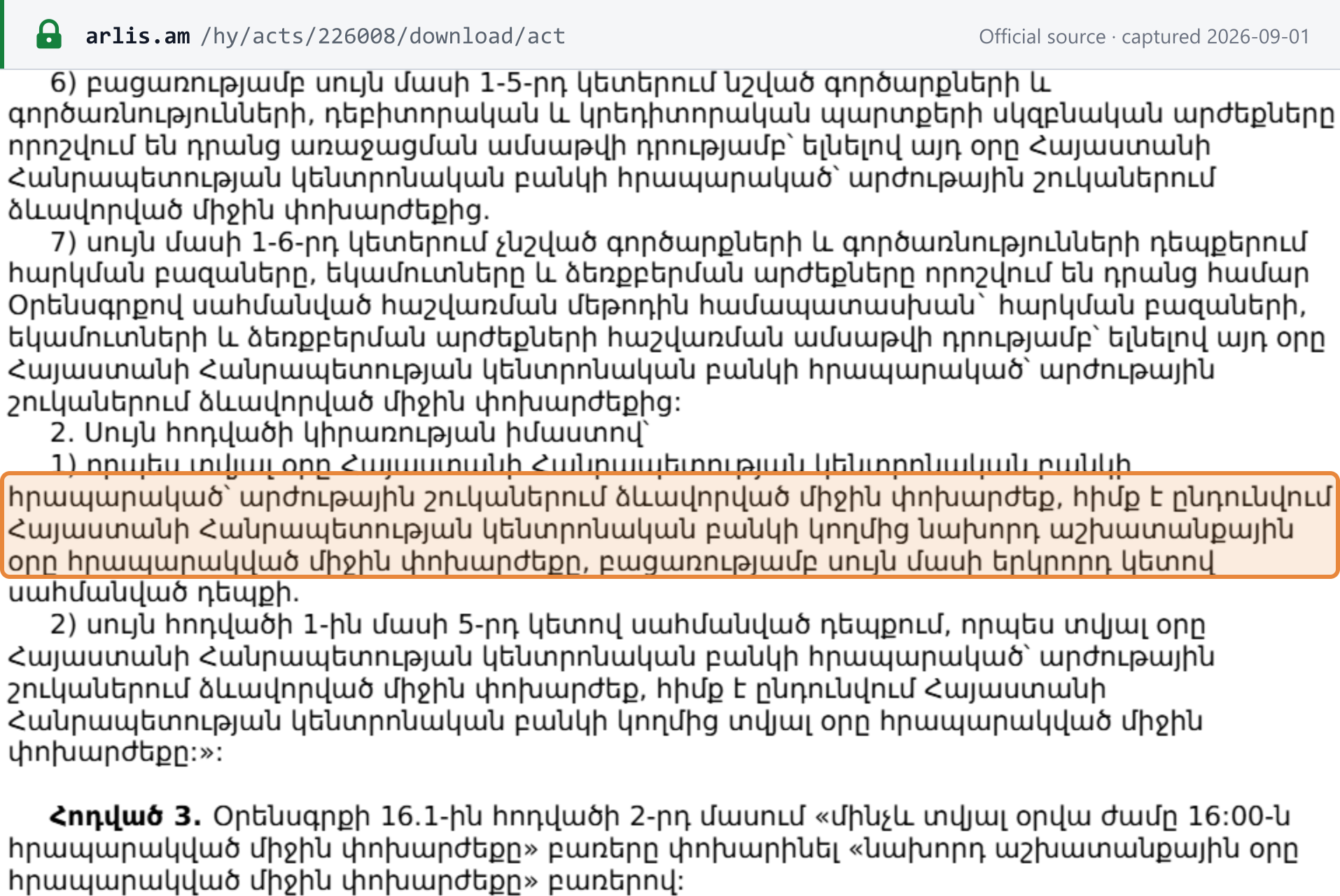 Source snapshot of the official page. Open full size ↗
Archived from the official distribution · www.arlis.am