Cambodia suspends VAT on electric-vehicle charging services until the end of 2028
- Jurisdiction
- Cambodia
- Tax
- VAT
- Change type
- Rate change
- Status
- In force
- Impact
- Action required
- Announced
- 20 October 2026
- Effective
- 13 October 2026
- Authority
- Ministry of Economy and Finance, Cambodia
- Systems
- Invoicing, Tax engine, POS
- Verified
- Fetched from official source · high confidence
Self-declaration regime taxpayers operating electric-vehicle charging stations in Cambodia, and their customers.
EV charging operators in Cambodia: stop charging VAT on charging services and stop claiming input VAT on related purchases from 13 October 2026.
InvoicingTax enginePOS
Cambodia's Ministry of Economy and Finance issued a Prakas, signed 13 October 2026 and published by the General Department of Taxation on 20 October 2026, suspending VAT on electric-vehicle charging services supplied by self-declaration taxpayers operating EV charging stations in Cambodia until the end of 2028. During the suspension, these businesses must not charge VAT on EV charging services to users, and VAT paid on imports or local purchases used for the EV charging business is not creditable as input tax. The Prakas takes effect from its signing date.
What changed in detail
Cambodia’s Ministry of Economy and Finance issued a Prakas, signed 13 October 2026 and published by the General Department of Taxation on 20 October 2026. It suspends VAT on electric-vehicle charging services supplied by self-declaration taxpayers operating EV charging stations in Cambodia, until the end of 2028.
During the suspension these businesses must not charge VAT on EV charging services to users. VAT paid on imports or local purchases used for the EV charging business is not creditable as input tax. The Prakas takes effect from its signing date.
What it means
The suspension removes VAT from the price charged to drivers, but it also removes the operator’s ability to recover input VAT on equipment and other purchases for the charging business. Operators should stop charging VAT and stop claiming input VAT from 13 October 2026, and should plan for the end-of-2028 date, after which the suspension no longer applies.
Proof
សហគ្រាសដូចមានចែងក្នុងប្រការ២ នៃប្រកាសនេះ ត្រូវបានអនុគ្រោះព្យួរទុកជាបណ្តោះអាសន្ននូវការអនុវត្តអាករលើតម្លៃបន្ថែមចំពោះសេវាសាកយានយន្តអគ្គិសនី រហូតដល់ដំណាច់ឆ្នាំ២០២៨។The enterprises specified in Article 2 of this Prakas are granted a temporary suspension of the application of value added tax on electric vehicle charging services until the end of 2028.
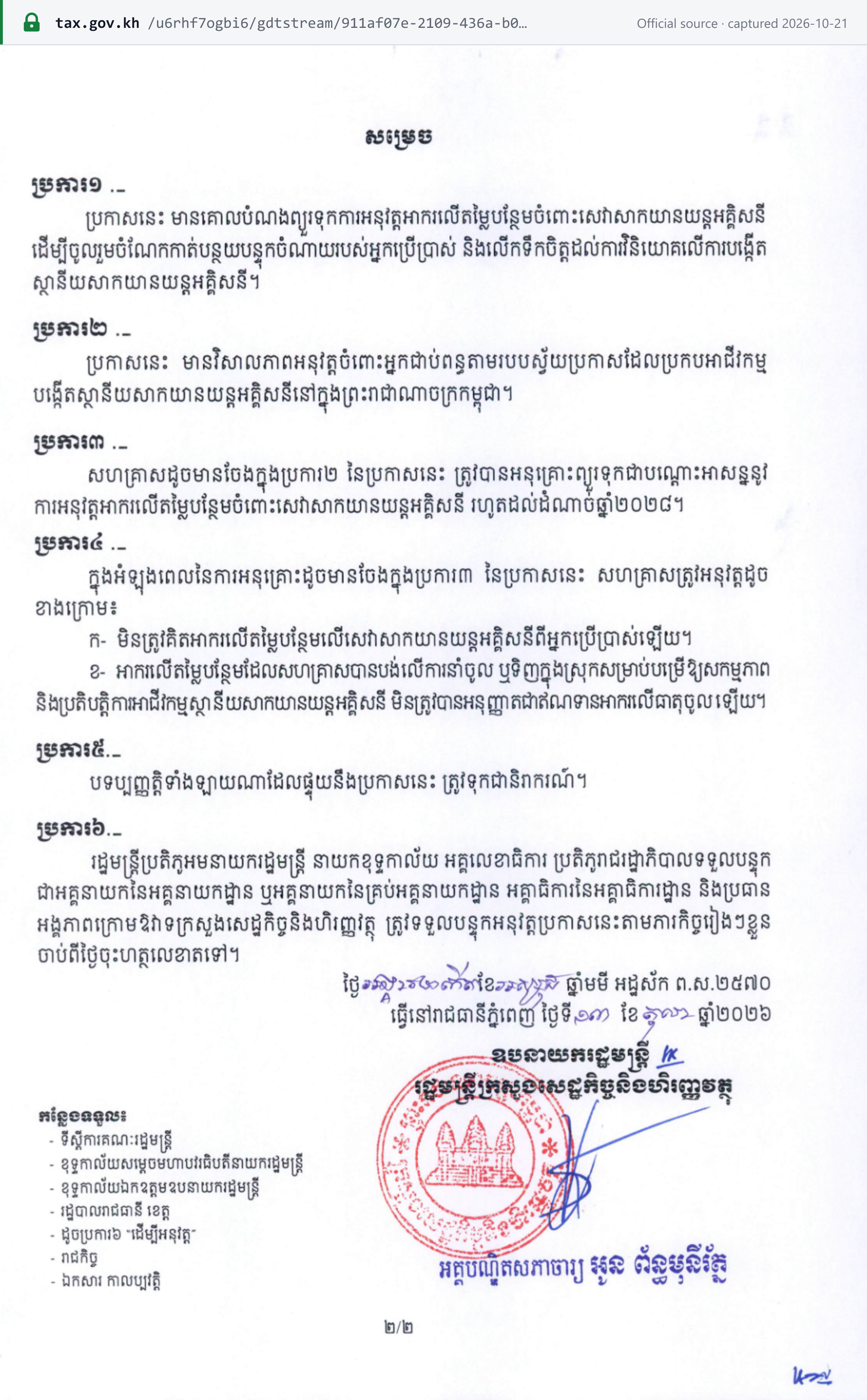 Source snapshot of the official page. Open full size ↗