Chile sets transport data requirements for invoices and dispatch notes from 1 November 2026 (SII Resolution 144 of 2026)
This page records one dated change. For the rules in Chile as they stand today, see the Chile guide →
- Jurisdiction
- Chile
- Tax
- VAT
- Change type
- Invoice rules
- Status
- Enacted
- Impact
- Action required
- Announced
- 23 October 2026
- Effective
- 1 November 2026
- Authority
- Servicio de Impuestos Internos (SII), Chile
- Systems
- ERP, Invoicing, E-commerce, Reporting
- Verified
- Fetched from official source · high confidence
Chilean VAT taxpayers that issue invoices or guías de despacho (dispatch notes) to cover the transport of movable goods, including shippers, carriers, logistics operators, couriers and marketplaces.
Update dispatch-note and invoice templates and ERP/DTE fields for transport data (driver, carrier RUT, plate, origin/destination) before 1 November 2026.
ERPInvoicingE-commerceReporting
Chile's SII Resolución Exenta N° 144 of 23 October 2026 fixes the additional requirements for invoices and guías de despacho (dispatch notes) that cover the transport of movable goods: origin and destination, driver name and ID plus carrier RUT, vehicle licence plate, and a precise description of the goods. It creates categories for self-managed, outsourced (third-party) and special-regime transport, introduces a third-party dispatch note (Guía de Despacho Tercerizada), and repeals Resolución Ex. SII N° 154 of 2025. The obligations apply from 1 November 2026; taxpayers opting for the third-party dispatch note or interoperability integration may implement those modes until 1 May 2027.
What changed in detail
Chile’s Servicio de Impuestos Internos (SII) issued Resolución Exenta SII N° 144 on 23 October 2026. It fixes the additional requirements for invoices and guías de despacho (dispatch notes) that cover the transport of movable goods. The document must show:
- the actual origin and destination of the transport;
- the driver’s full name and identity card number, and the carrier’s RUT;
- the licence plate of the vehicle and any trailer; and
- a precise and clear description of the goods being moved.
The resolution sorts transport into three categories: self-managed transport (the issuer holds all the required data when it issues the document), outsourced or third-party transport (the issuer does not know the driver or vehicle when the document is issued), and a special regime for taxpayers who must issue a dispatch note before a sector regulator authorises the movement. It introduces a third-party dispatch note, the Guía de Despacho Tercerizada (GDT), which a logistics intermediary or carrier can issue to complete missing data, referencing the original document.
The obligations apply from 1 November 2026. Taxpayers opting for the GDT or for integration through the SII’s interoperability mechanisms may implement those modes until 1 May 2027. Resolución Ex. SII N° 154 of 2025 is repealed from the date the new resolution enters into force.
What it means
The data fields are the immediate job: ERP and electronic-invoicing (DTE) templates need the driver, carrier RUT, plate and origin/destination fields populated before 1 November 2026. Businesses that hand goods to couriers, logistics operators or marketplaces are the ones most likely to lack driver and vehicle data at issue time, so they should decide now whether to use the third-party dispatch note or interoperability route, and plan to have it working by 1 May 2027.
Proof
18° Las obligaciones establecidas en la presente resolución entrarán en vigencia a contar del 1° de noviembre de 2026.18. The obligations established in this resolution shall enter into force from 1 November 2026.
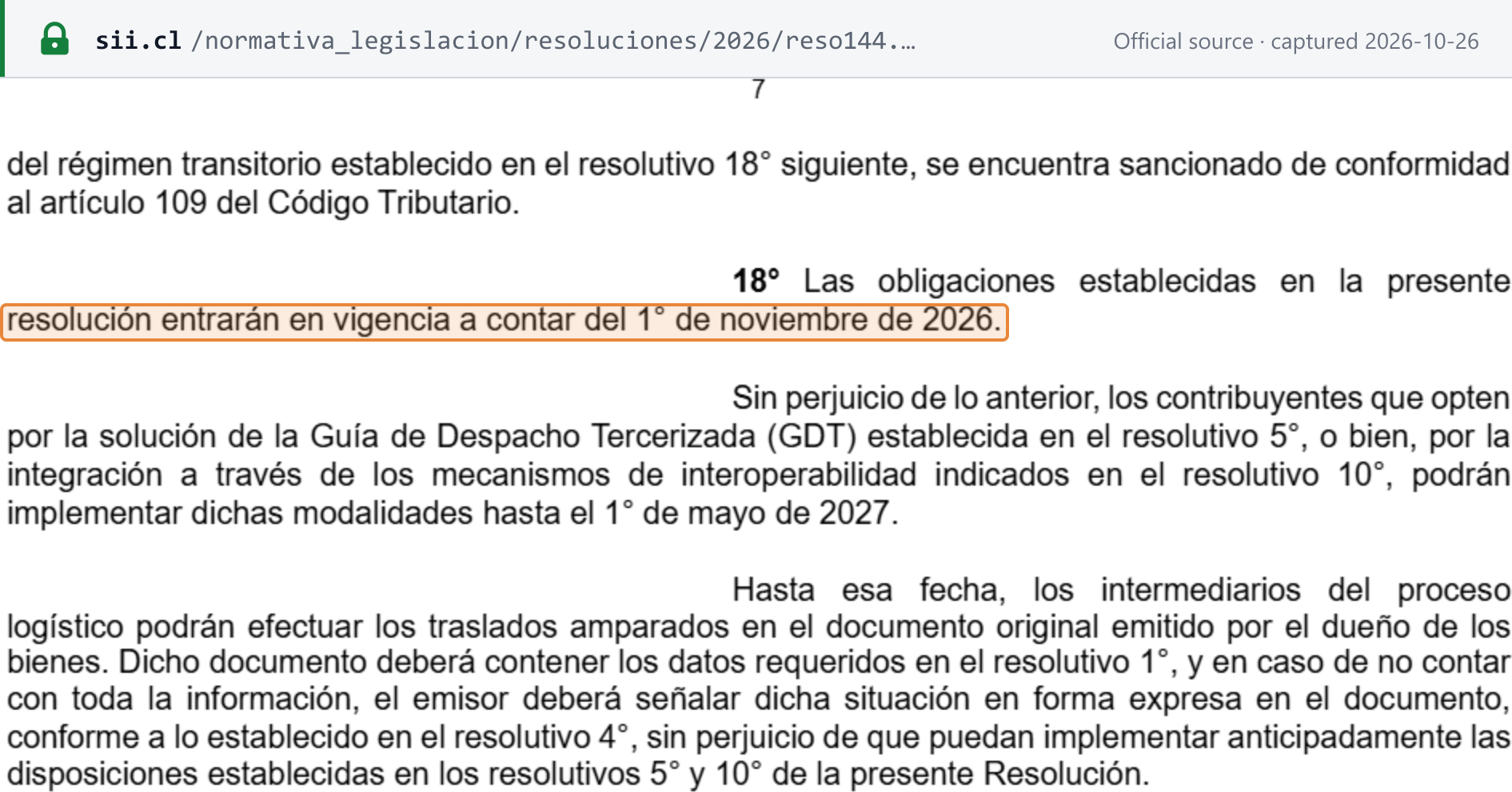 Source snapshot of the official page. Open full size ↗