· Abhilash John Philip · Industry · 8 min read
What Would It Take to Build a Tax Provider in the Age of AI?
A thought experiment on what it takes to build a tax provider in the age of AI — why the old moat of information asymmetry is gone, why the new moat is the maintenance overhead of government integrations, and why owning the e-invoicing layer is the path to owning returns filing.
Here is a thought experiment we keep running internally. If you had to build a tax provider from scratch today — not in 2015, but now, with the tools that exist in 2026 — what would you actually build? And more importantly, what would make it defensible? Because the answer to that second question has quietly changed, and a lot of the industry hasn’t caught up.
What a tax provider actually does
The full job is bigger than most people picture. Staying compliant is a lifecycle, not a lookup: register and track nexus, validate your customers, manage exemptions, calculate the right tax, generate and submit the invoice, retain records, prepare and file returns, and be ready for an audit. Eight stages, across every jurisdiction you sell into.
For most of the industry’s history, “tax provider” has meant the first half of that list — verification, rate determination, the knowledge to get a number right. The back half — actually generating the return, filing it with the authority, and doing that on a hundred different government calendars in a hundred different formats — is where the real operational weight sits. Hold that thought, because it’s the whole point.
The old moat is gone
For a long time, the moat in tax software was information asymmetry. The rules were scattered, technical, written for tax authorities and not for the businesses that had to obey them. Knowing what the rate was in Chile, or how to register in Poland, or which of a company’s numbers was the VAT ID — that knowledge was hard-won and hard to find, and having it was a real advantage. Whole products were built on being the place that simply knew.
AI collapses that advantage. Anyone can now point a capable model at a government portal and get a fluent, mostly-correct answer about almost any tax rule in seconds. The information isn’t scarce anymore. A static database of tax facts — the thing that used to be a company’s crown jewels — is becoming a commodity, and a slowly-rotting one at that, because the moment you write a rule down it starts going out of date.
So if knowing the rules is no longer the moat, what is?
The new moat is maintenance overhead
The defensible work has moved to the least glamorous part of the whole system: staying connected. Not knowing the rules once, but staying integrated with a hundred-plus government systems for returns filing and clearance, tracking their constantly-changing formats, schemas, field requirements, and mandate dates, and keeping every jurisdiction correct and current — forever, without a human quietly forgetting to check.
This is genuinely hard in a way that information never was. Government filing systems change formats with little notice. E-invoicing mandates slip, then un-slip. A schema version bumps and every integration downstream breaks. There is no “done” — the maintenance bill arrives every single week, in every jurisdiction, at once. That is exactly the kind of grinding, unbounded operational load that does not commoditize, because carrying it by hand is punishing and most people won’t. The moat is no longer what you know. It’s what you can afford to keep maintaining.
Framed that way, the roadmap question becomes sharp: whoever can carry that maintenance overhead at the lowest cost — and get closest to the rails where the money actually moves — wins.
Why you have to own the e-invoicing layer
This is where e-invoicing stops being a compliance chore and becomes the strategic center of gravity. We’ve argued the destination before — every tax provider ends up an e-invoicing provider — but the reason it’s forced is worth spelling out.
E-invoicing and continuous transaction controls put the tax authority inside the transaction: the invoice is validated and cleared by the government in real time, and increasingly the sale cannot complete without it. The reflex reading is that this threatens tax providers — the government becomes the validator, so who needs a middleman? We think that reading is exactly backwards.
The prize is what e-invoicing does downstream. Once the authority already holds every cleared invoice, returns filing simplifies dramatically — in more and more jurisdictions the return is pre-populated, or reduced to a reconciliation of data the government already has. In other words, e-invoicing is becoming the on-ramp to returns filing. Whoever owns the real-time invoice clearance layer is sitting on the exact data and the exact government connections that the back half of the lifecycle — the filing half, the operationally heavy half, the part that is now the moat — runs on.
So the conclusion is uncomfortable but clean: a tax provider that wants to be defensible in the age of AI can’t stay in the safe, commoditizing front half of the lifecycle. It has to move toward owning the e-invoicing layer, because that is the layer that carries you into filing. Determination gets you a seat. E-invoicing gets you the rails.
AI is what makes the maintenance affordable
Here’s the twist that ties it together. The reason nobody built a great always-current, all-jurisdictions tax provider before is that the maintenance overhead was linear in headcount — you needed analysts reading gazettes and engineers babysitting integrations, one country at a time — and knowledge bases rot the instant the humans look away. The economics never worked.
AI changes the economics of maintenance specifically. Not by “knowing tax law” — a model will happily invent a rate — but by making it cheap to watch, verify, and propagate changes at a scale no team could staff. That’s the part we’ve been building, as a pipeline of narrow agents with hard guardrails: a weekly scan of official sources that freezes what it finds into a dated, append-only ledger; an enrichment step that re-opens each official source, confirms the figure, and updates it everywhere it appears so nothing drifts; a separate fact-checking pass where the agent that wrote a claim is never the one allowed to verify it, re-deriving every figure from primary sources and capturing dated screenshot evidence for the load-bearing ones; and translation agents that carry it into five languages without machine-translating blindly. The point of all of it is not to generate more content. It’s to make the impossible maintenance bill payable.
”Last Week in Taxes”: our proof of concept
We didn’t want this to stay a whiteboard theory, so we shipped a piece of it you can look at: Last Week in Taxes.
Every week it publishes a verified, officially-cited digest of indirect-tax changes worldwide — VAT, GST, e-invoicing mandates — one issue at a time, each change traced back to the government or tax-authority source it came from, and structured so that both a human and an AI engine can consume it and cite it. It is produced by the agent pipeline above, not by a person reading a hundred bulletins. It is, deliberately, the maintenance engine running in public: proof that a tax knowledge base can keep itself current across every jurisdiction, with citations, week after week, without rotting.
That’s the proof of concept. The vision behind it is bigger.
The vision: always-on compliance
Where this goes is away from the old model of a static database you query when you have a question, and toward an always-on compliance layer — something closer to a tax consultant that never sleeps than a reference book. A system that continuously watches every jurisdiction, keeps itself provably current, plugs into the government e-invoicing and filing rails, and eventually doesn’t just tell you what changed but acts on it — updating your setup, flagging what a new mandate means for you, and moving you toward the filing itself.
“Last Week in Taxes” is the first visible step: always-on awareness. The road from there runs through the e-invoicing layer and into always-on filing.
The bet
So the real answer to the thought experiment is this. In the age of AI, the winner is not whoever knows the most tax rules today — that knowledge is becoming free, and a database of it becomes a liability the moment it goes stale. The winner is whoever can maintain correctness across the most jurisdictions at the lowest human cost, and own the e-invoicing rails that lead into returns filing.
Information used to be the moat. Now it’s maintenance. AI is what makes maintenance at global scale finally affordable — and e-invoicing is the layer that turns all that maintenance into something a business will pay for. That’s the tax provider worth building now, and it’s the one we’re building.

About the Author
Abhilash John Philip is the co-founder of Lookuptax. He has extensive experience building scalable API infrastructure for fintechs and navigating global tax compliance regulations for digital sales.
Connect on LinkedIn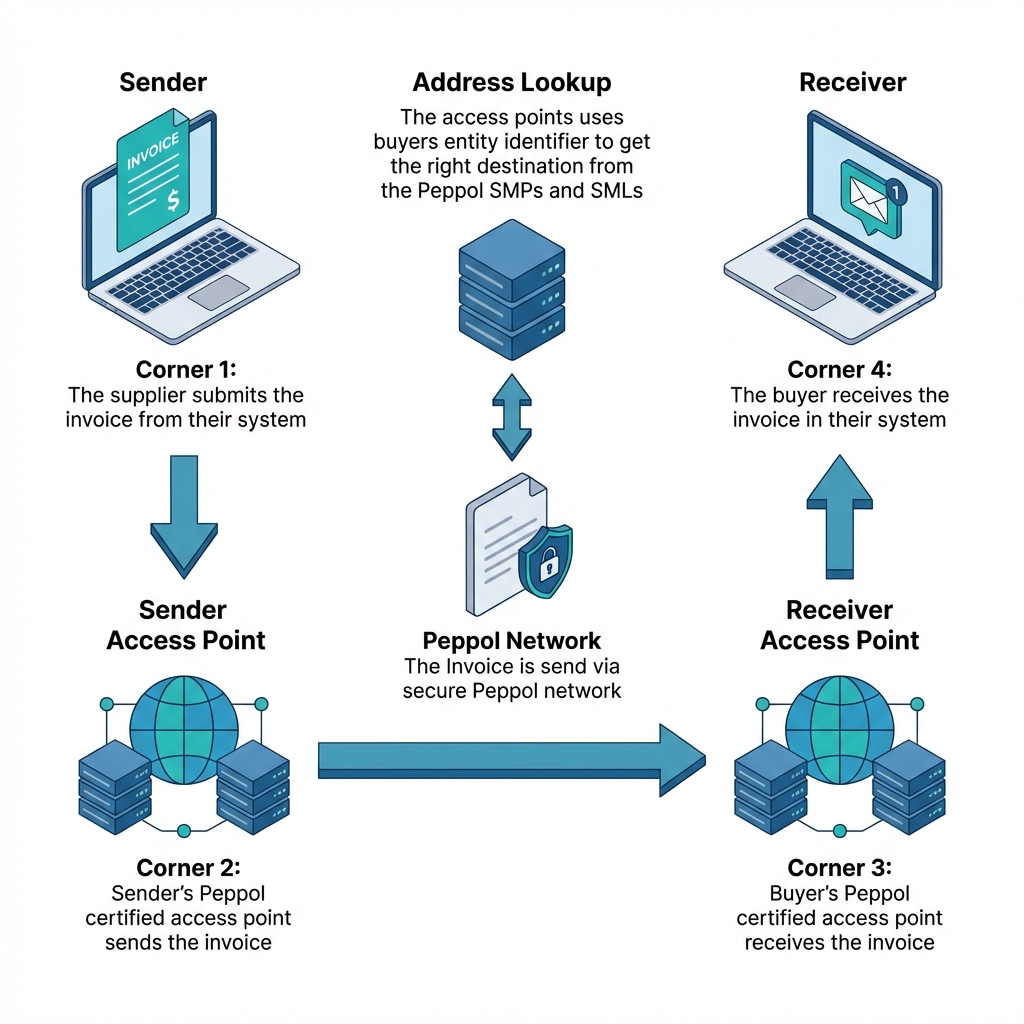

![Location Evidence Requirements for Digital Sales: Complete 2026 Tax Compliance Guide [EU, US, Asia-Pacific]](/_astro/location-evidence-digital-sales-hero.BXh0bL_c.png)