How to verify SIRET in France?
SIRET Search on Infogreffe Website
SIRET number search is available for free on the Infogreffe Website — the official site of the French commercial courts. Search by name, SIREN, SIRET, or managers.
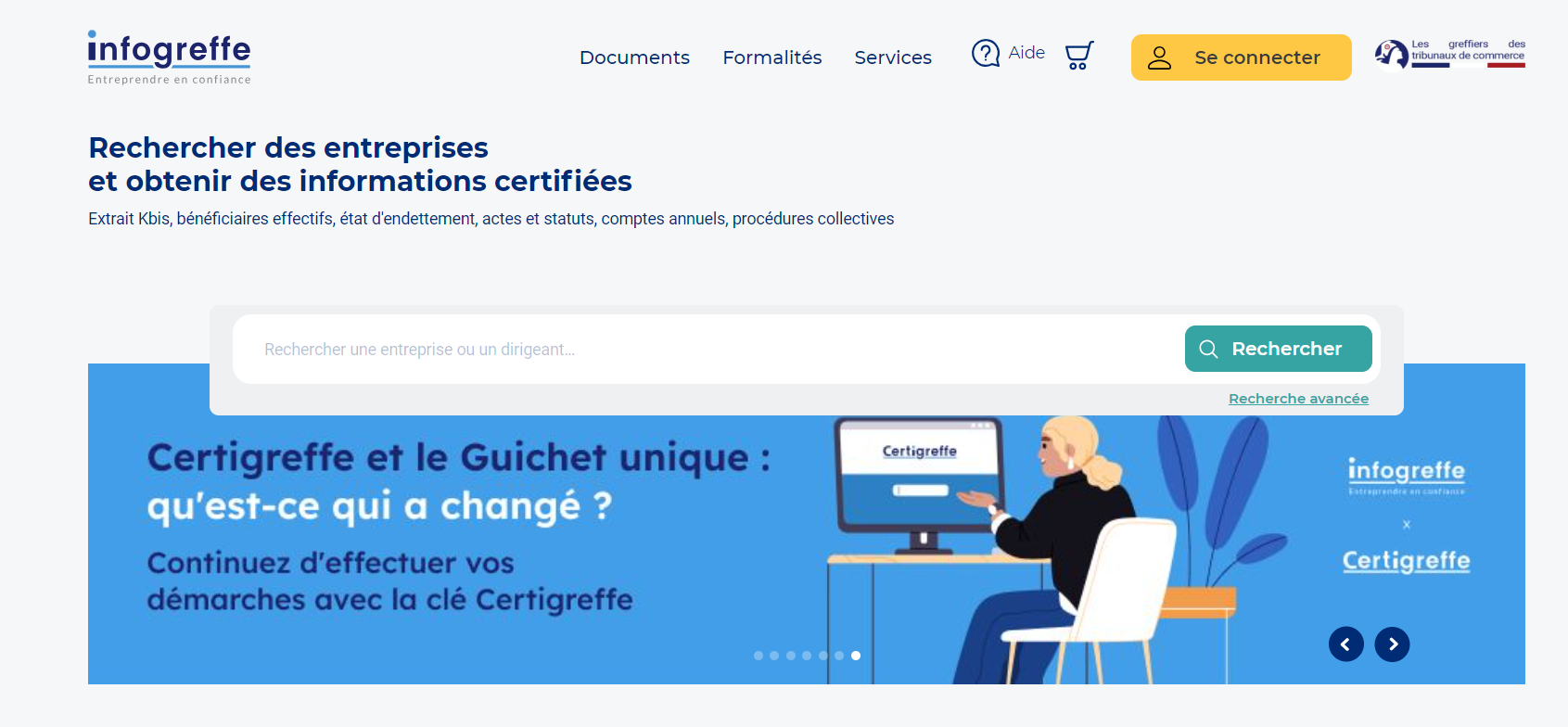 |
| SIRET Search on Infogreffe Website |
Example SIRET: 77567041700051, 84198382800028
A successful SIRET verification on Infogreffe returns:
- Company name
- SIREN
- Registered with RCS
- VAT number
- Head office (siège social)
- SIRET
- List of executives
- Turnover
- Registration date
- Activity (NAF code)
- Legal status
- Financial analysis
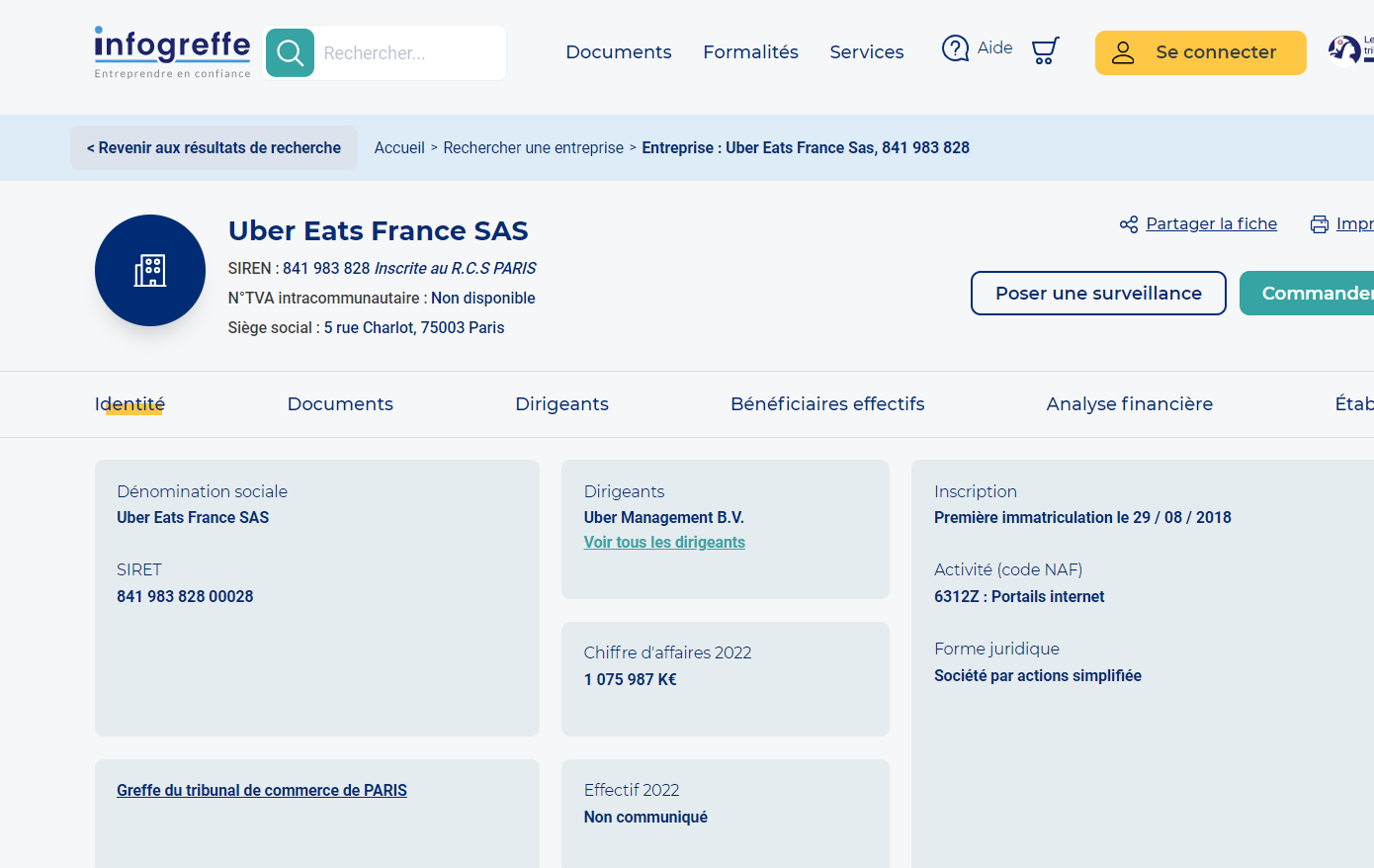 |
| Successful SIRET Verification |
SIRET Search on INPI data portal
SIRET number search is also available for free on the INPI data portal. INPI covers the full National Business Register (RNE) including commercial companies, auto-entrepreneurs, artisans, and liberal professions.
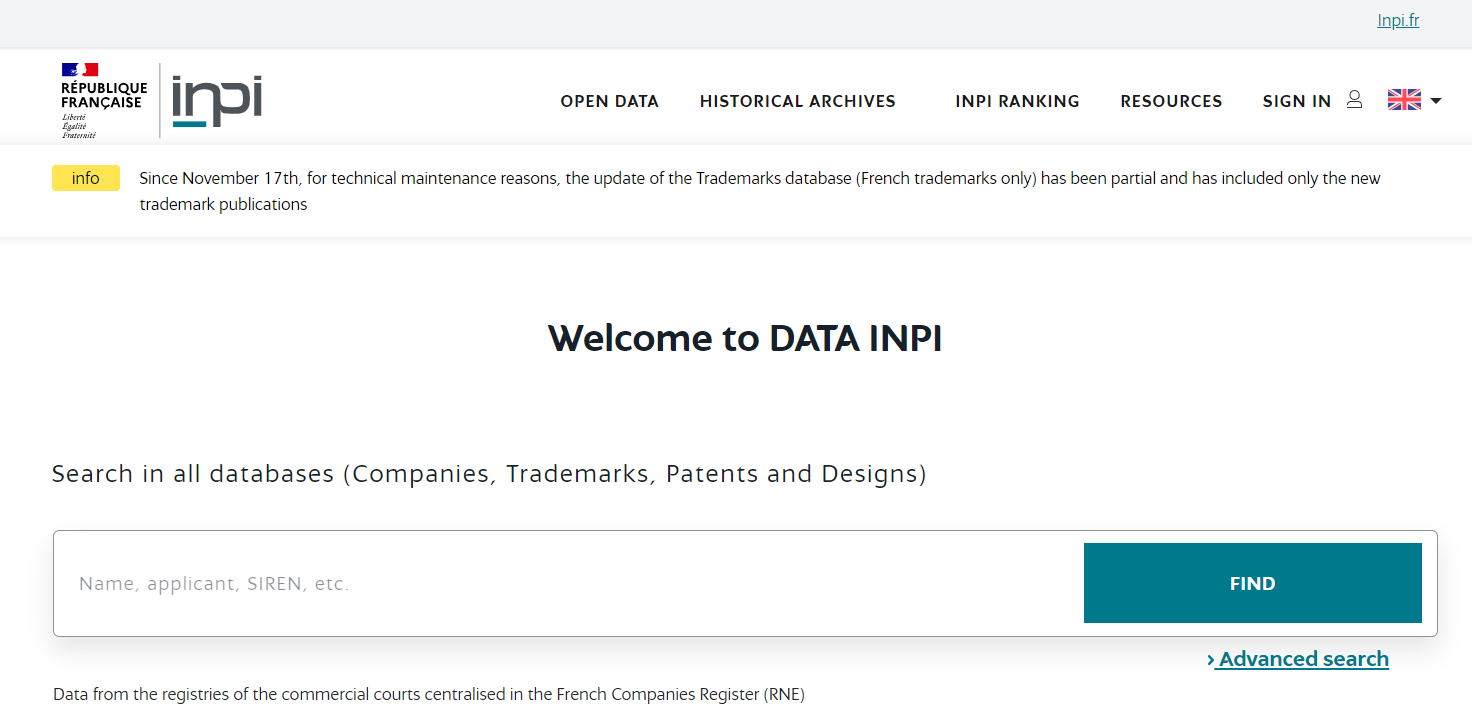 |
| SIRET validation on INPI website |
Example SIRET: 87854786800017, 32773318400516
A successful SIRET verification on INPI returns: Company name, SIREN, Registration date, Start of activity, Legal form, APE code, Share capital, Registered address, Representatives, and full Establishments list with each SIRET's status (Ouvert/Fermé).
For more details on French tax identifiers, see our France Tax ID Guide.
Frequently Asked Questions
What does the 5-digit NIC code at the end of a SIRET mean, and how do I identify the head office SIRET?
The NIC (Numéro Interne de Classement) is the last 5 digits of a SIRET. It distinguishes each establishment within the same company (same SIREN). The head office (siège social) typically — but not always — has NIC code 00001. Secondary establishments receive sequentially assigned NIC codes (00017, 00025, etc.). You can confirm which establishment is the siège social via the "Type d'établissement" field in the INPI portal. For invoicing, use the SIRET of the specific establishment that is the contractual party — not necessarily the head office. [1]
A French supplier has multiple SIRETs — which one should appear on their invoice?
French invoicing rules require the SIRET of the establishment that is the contracting party. In practice, many French companies display their head office SIRET on all invoices regardless of which establishment is performing the service. For tax invoice compliance under French VAT rules, the TVA intracommunautaire number (FR + key + SIREN) is the mandatory identifier; the SIRET is supplementary but commonly expected by large buyers and public entities. When a company has multiple establishments, confirm with the supplier which SIRET identifies the entity legally responsible for the transaction. [1]
INPI shows an establishment as "Fermé" — does that mean the company itself is closed?
Not necessarily. "Fermé" means that specific establishment (its SIRET) has ceased operating — for example, a store or warehouse that has closed — while the parent company (SIREN) may still be fully active with other open establishments. An invoice from a closed establishment dated after the closure date is irregular and may not be enforceable. Always verify that the SIRET on an invoice belongs to an "Ouvert" (open) establishment, and separately confirm the company-level SIREN is not "radiée." Annuaire Entreprises clearly separates company-level and establishment-level status. [1]
What is the connection between a SIRET and a French EORI number?
A French EORI number is formed by prepending "FR" to the 14-digit SIRET of the establishment registered for customs activity: EORI = FR + SIRET (e.g. FR77567041700051). A company with multiple establishments may use a different SIRET for customs than for invoicing — a logistics warehouse's SIRET may differ from the commercial head office's SIRET. To verify a French EORI, use the French Customs EORI lookup at douane.gouv.fr/eori, which lets you search by SIRET to retrieve the corresponding EORI. [1]
Do auto-entrepreneurs and liberal professions have a SIRET?
Yes. Auto-entrepreneurs registered with URSSAF receive a SIREN and at least one SIRET from INSEE. Liberal professions (doctors, lawyers, architects) registered through their professional order also receive SIRET numbers appearing in the INPI RNE register. For auto-entrepreneurs, the SIRET is their unique identifier used on quotations and invoices. They are searchable on Annuaire Entreprises and INPI exactly like commercial companies. Because most auto-entrepreneurs have only one establishment, their SIREN and the prefix of their SIRET are the same 9-digit number. [1]
What is the difference between Infogreffe and INPI for SIRET lookups?
Infogreffe publishes data from the commercial court registers (RCS — Registre du Commerce et des Sociétés) and covers commercial businesses (SARL, SAS, SA, etc.). INPI/Annuaire Entreprises is broader: it integrates RCS data plus artisans (RM), auto-entrepreneurs, liberal professions, and agricultural operators. For a standard commercial company, both sources are reliable. For auto-entrepreneurs, liberal professions, or artisans, INPI/Annuaire Entreprises is the correct source. Data update speed is similar (~1–3 business days after a greffe filing). For certified official documents, only Infogreffe issues the KBIS extract. [1] [2]
How do I use the INSEE Sirene API to verify SIRET numbers programmatically?
The INSEE Sirene API (api.insee.fr) provides REST endpoints for SIRET lookups at /siret/{siret}, returning JSON with establishment status, APE code, address, legal form, and whether it is the siège social. A free API key is required; rate limits apply (30 req/min). The government's simpler Annuaire Entreprises API at recherche-entreprises.api.gouv.fr/v3/etablissements/{siret} requires no authentication and suits lighter integrations. Key limitation: there is typically a 1–3 day lag between a new SIRET appearing at the greffe and its availability in the API. [1] [2]
How Lookuptax can help you in VAT validation?
Lookuptax VAT validation revolutionizes VAT number validation with its robust platform, empowering businesses to seamlessly verify VAT numbers across over 100 countries. Our cutting-edge technology ensures accurate and efficient validation, reducing errors and enhancing compliance.