Singapore TIN number guide
UEN - Business (ROB)
UEN - Business (ROB) refers to the Unique Entity Number issued to business entities registered in Singapore.
UEN is used to uniquely identify registered businesses operating in Singapore It is issued by government agencies like Accounting and Corporate Regulatory Authority (ACRA), Inland Revenue Authority of Singapore (IRAS) and others. All companies, businesses, partnerships, societies etc are required to register for a UEN.
Format
UEN – Business (ROB): NNNNNNNNC - 9 characters
Official Database - UEN search
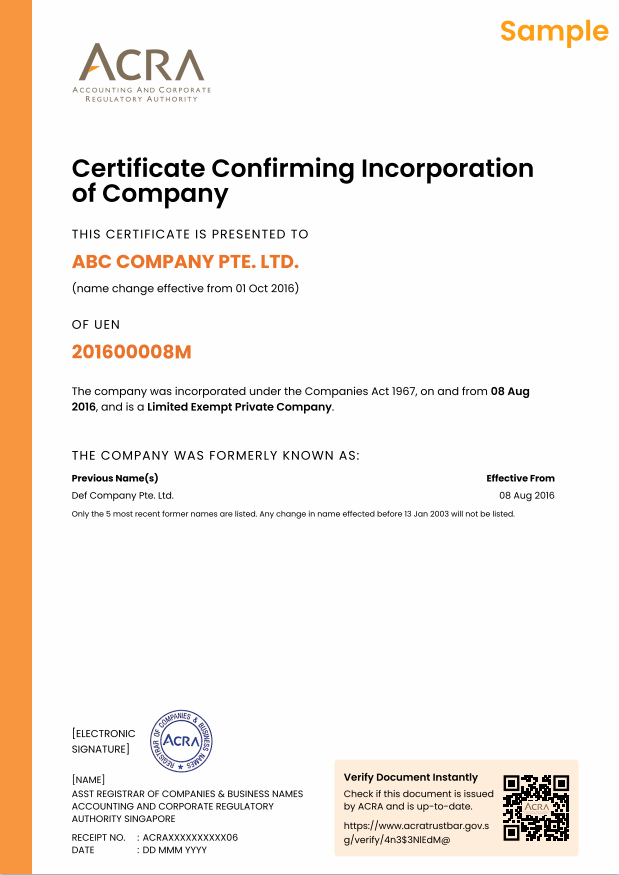 |
| Singapore Incorporation certificate |
UEN – Local Company (ROC)
UEN - Local Company (ROC) refers to the Unique Entity Number issued to locally registered companies in Singapore. ROC stands for "Registered Of Company" It is issued by the Accounting and Corporate Regulatory Authority (ACRA) in Singapore. All companies incorporated in Singapore are required to register for a UEN-Local Company
Format
For Local Companies - YYYYNNNNNC - 10 characters For Foreign Companies - F000NNNNNC or FDDDNNNNNC
UEN – Others
This is the standard identification number assigned to entities that are not classified as businesses or local companies.
Format
SYYPQNNNNC or TYYPQNNNNC - 10 characters
In the above formats
- D is a space
- C is a check alphabet
- N is numeric
- YYYY is a year
- TYY and SYY are the year of issuance, where T represents ‘20’ and S represent ‘19’ PQ is the entity type, e.g. ‘LL’ represents ‘Limited Liability Partnership’
NRIC number
The National Registration Identity Card (NRIC) number is a unique identification number issued to Singaporean citizens and permanent residents. It serves as a vital document for identification purposes in various transactions and interactions with government agencies and private entities. The NRIC number contains personal information such as the individual's birth date, gender, and a checksum digit for validation. It is crucial for accessing government services, opening bank accounts, applying for jobs, and other official matters.
Format : #0000000@
First letter #
The letter assigned to individuals can vary based on their status:
- For Singapore citizens and permanent residents born before 2000, the letter "S" is assigned.
- Singapore citizens and permanent residents born in or after 2000 are designated the letter "T."
- Foreigners with employment or student passes issued before 2000 are allocated the letter "F."
- Those with employment or student passes issued in or after 2000 are assigned the letter "G."
- Foreigners with employment or student passes issued in or after 2022 are given the letter "M."
Digits 2-8
This 7-digit sequence is specifically designated to the individual documented:
- For Singapore citizens and permanent residents born in 1968 and later, their NRIC number commences with their birth year, such as 71xxxxx#. Conversely, for those born in 1967 or earlier, the NRIC number isn't linked to their birth year and usually starts with 0 or 1.
- Non-native Singaporeans born before 1967 receive leading digits 2 or 3 upon gaining permanent residency or citizenship, randomly assigned based on the issuance sequence.
- Subsequent digits are solely for individuals obtaining permanent residency or citizenship after 2008, indicated by "4" or "5."
@ - The last digit is a checksum
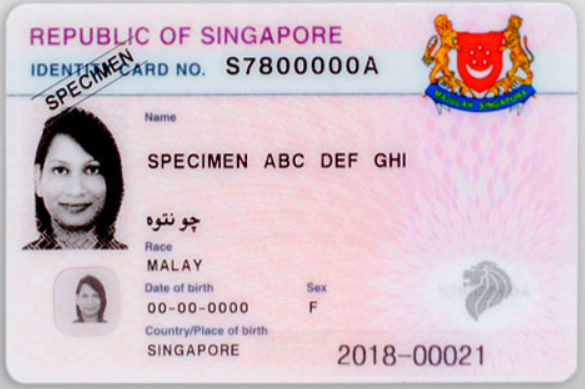 |
| NRIC Card |
FIN number
The Foreign Identification Number (FIN) is assigned to foreign individuals residing or working in Singapore who hold a Work Pass Card, such as an Employment Pass or an Immigration Pass issued by the Ministry of Manpower (MOM). It serves as a unique identifier for foreign nationals and is essential for various administrative and legal purposes within Singapore. The FIN facilitates access to government services, employment, banking, and other essential activities requiring identification. It ensures smooth transactions and compliance with immigration and labor regulations for foreign individuals contributing to Singapore's workforce and economy.
Format : The format of FIN number is same as that of NRIC mentioned above
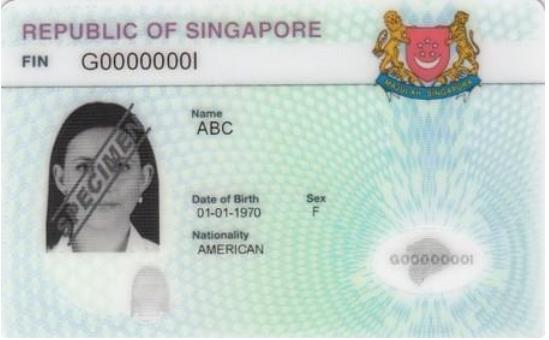
FIN number can be found on different passes such as Employment Pass, Overseas Networks and Expertise Pass, EntrePass, Training Employment Pass, Personalised Employment Pass, Work Holiday Pass, Dependant’s Pass and Long Term Visit Pass
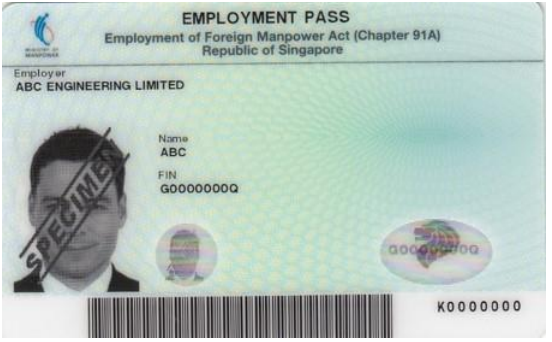 | 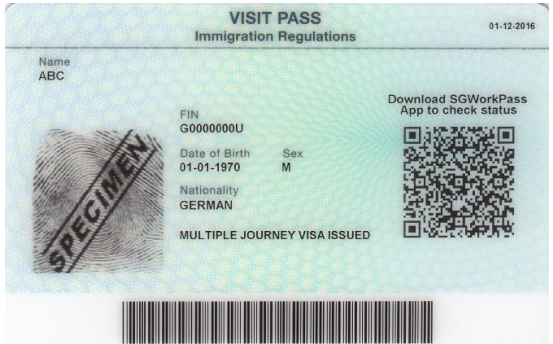 |
| FIN on Employment Pass - Front | FIN on Employment Pass - Back |
 | 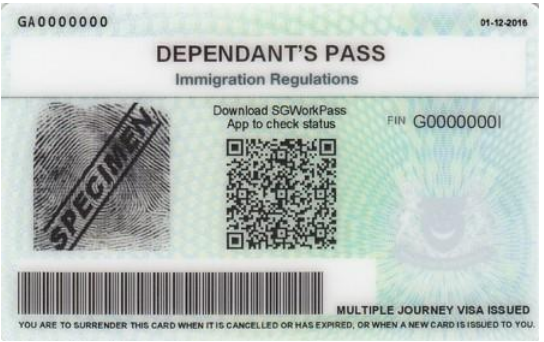 |
| FIN on Dependant Pass - Front | FIN on Dependant Pass - Back |
GST Reg Number
The Goods and Services Tax (GST) Registration Number in Singapore consists of 10 characters. The initial two characters can be either letters or numbers, followed by seven numeric characters, and ending with a checksum character. Issued by the Inland Revenue Authority of Singapore (IRAS), this number is assigned to entities registered for GST. Sometimes GST number will be same as the UEN number
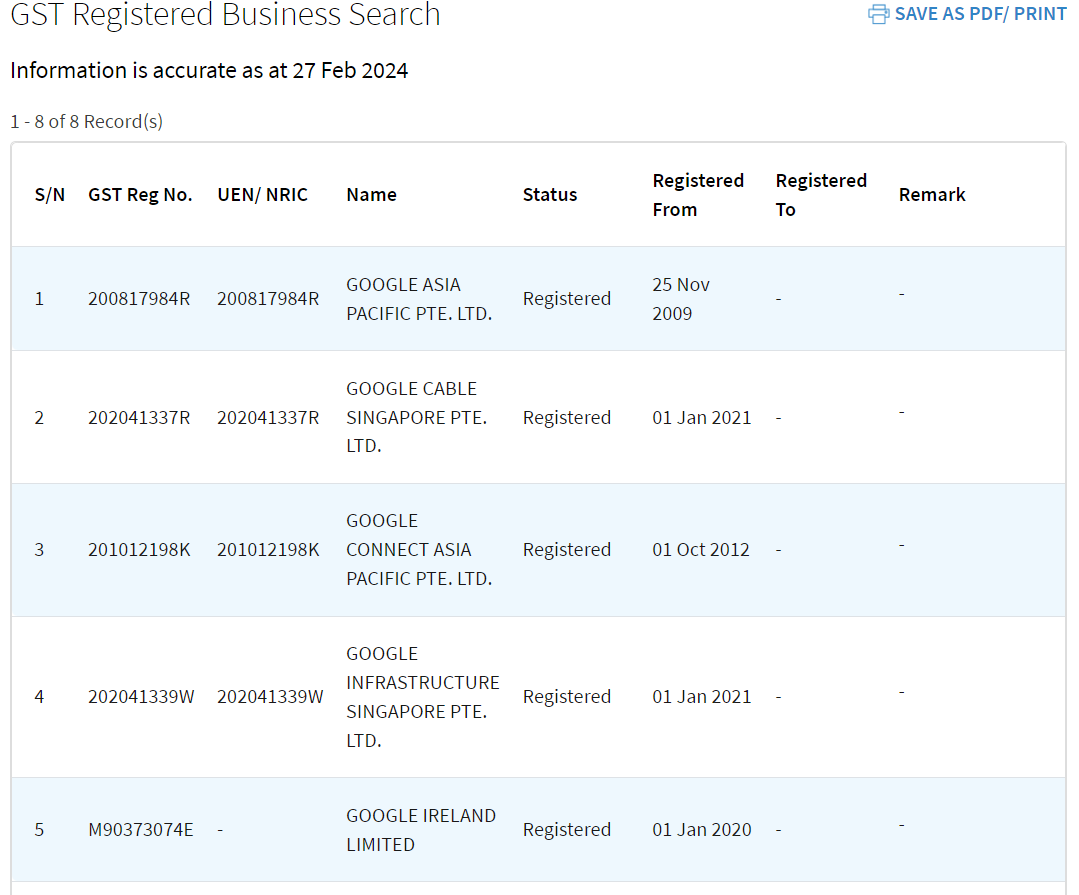 |
| GST Reg Number |
How Lookuptax can help you in VAT validation?
Lookuptax VAT validation revolutionizes VAT number validation with its robust platform, empowering businesses to seamlessly verify VAT numbers across over 100 countries. Our cutting-edge technology ensures accurate and efficient validation, reducing errors and enhancing compliance.
Frequently Asked Questions
What happens if I exceed the SGD 1 million GST threshold but register late?
If your taxable turnover exceeds SGD 1 million in a calendar year, you must apply for GST registration between 1 January and 30 January of the following year to be registered by 1 March. If you miss this deadline, IRAS backdates your registration to the date you ought to have registered and requires you to remit GST on all past sales from that backdated date — even if you never collected it from customers. A fine of up to SGD 10,000 and a penalty equal to 10% of the GST due may apply. Voluntary disclosure before IRAS discovers the lapse generally results in the fine and penalty being waived. [1] [2]
As an overseas SaaS or digital services provider, when must I register for GST under the OVR regime?
Singapore's Overseas Vendor Registration (OVR) regime requires foreign businesses to register for GST if they exceed two thresholds simultaneously: global annual turnover above SGD 1 million and the value of remote services (including digital subscriptions, software, and non-digital services deliverable remotely) or low-value goods supplied to non-GST-registered Singapore customers exceeds SGD 100,000. The OVR regime was extended on 1 January 2023 to cover non-digital remote services and low-value goods (valued at SGD 400 or below imported by air or post). Once both thresholds are met, registration must be completed within 30 days. [3] [4]
My Singapore client is withholding tax from my invoice — what rate applies, and can I reduce it?
When a Singapore business pays a non-resident professional (consultant, trainer, coach) for services rendered in Singapore, it must withhold tax and remit it to IRAS. The default rate is 15% of gross payment, which acts as a final tax. Alternatively, if the non-resident elects to be taxed on net income (gross fee minus allowable expenses), the rate is 24% (applicable to income due and payable from 1 January 2023 onwards; the prior rate was 22% from 2016 to 2022). The payer must file and pay the withheld amount to IRAS by the 15th of the second month following the payment date. Different rates apply to royalties (10%) and technical service fees paid to non-resident companies (17%). [5] [6]
Can I still use a Singapore NRIC or FIN number as a password or system authentication factor?
No. The Personal Data Protection Commission (PDPC) and the Cyber Security Agency of Singapore issued a joint advisory in June 2025 explicitly prohibiting the use of NRIC or FIN numbers (in full or masked form) as passwords or authentication factors. NRIC numbers are public identifiers — ACRA removed masking from the BizFile register in December 2024 — meaning they cannot be treated as secret credentials. All private-sector organisations must phase out NRIC-based authentication by 31 December 2026; PDPC enforcement action, including financial penalties, begins 1 January 2027. Collect NRIC numbers only where legally required or necessary to verify identity to a high degree of fidelity. [7] [8]
Does GST InvoiceNow (Peppol) mandate affect new GST registrants, and what must they do before registering?
Yes — IRAS introduced a phased GST InvoiceNow requirement that directly ties e-invoicing to GST registration. From 1 November 2025, newly incorporated companies applying for voluntary GST registration must obtain a Peppol ID before their GST application is accepted by IRAS. From 1 April 2026, all voluntarily GST-registered businesses (regardless of incorporation date) must transmit invoice data to IRAS via the InvoiceNow network using an IMDA-accredited access point. The UEN serves as the Peppol identifier prefix. Businesses that skip this step will find their GST registration application rejected. Free solution packages are available for eligible GST-registered businesses. [9] [10]