Isle of Man Tax ID Guide — Tax Reference Number, NINO, VAT & Company Numbers
The Isle of Man is a Crown dependency with its own tax laws — it is not part of the United Kingdom. [8] Its main tax identifier is the Tax Reference Number, issued by the Income Tax Division to every individual, company, trust, foundation and partnership that has to file a Manx tax return. Individuals can also be identified by their National Insurance number (NINO), which comes from the same series as UK numbers. [2] For VAT, the island and the UK are treated as a single area: Isle of Man VAT numbers carry the GB prefix and are issued by the island's Customs and Excise Division. Companies also have a company number from the Isle of Man Companies Registry.
Isle of Man Tax IDs at a Glance
| Number | Issuer | Format | Who has one | Example |
|---|---|---|---|---|
| Tax Reference Number | Income Tax Division | Letter (H, C or X) + 6 digits, optional - + 2 digits | Individuals, companies, trusts, foundations, partnerships that file a Manx return | H111111-11 (OECD) |
| National Insurance number (NINO) | Income Tax Division, or HMRC for people arriving from the UK | 2 letters + 6 digits + A, B, C or D | Individuals, normally from age 16 | MA999999A (OECD) |
| VAT registration number | Customs and Excise Division | GB + 9 digits, starting 00 | VAT-registered traders on the Isle of Man register | GB004925592 |
| Company number | Companies Registry | 6 digits + a register letter | Companies, LLCs, foundations, limited partnerships, business names | 008505V |
Tax Reference Number
| Field | Detail |
|---|---|
| Length | 1 letter + 6 digits, optionally followed by a hyphen and 2 digits |
| H | Individual taxpayer |
| C | Company, including limited liability companies (LLCs) |
| X | Trust, foundation or partnership, including limited liability partnerships (LLPs) |
| Suffix | Optional — C222222 without a suffix is acceptable |
| Check digit | None published |
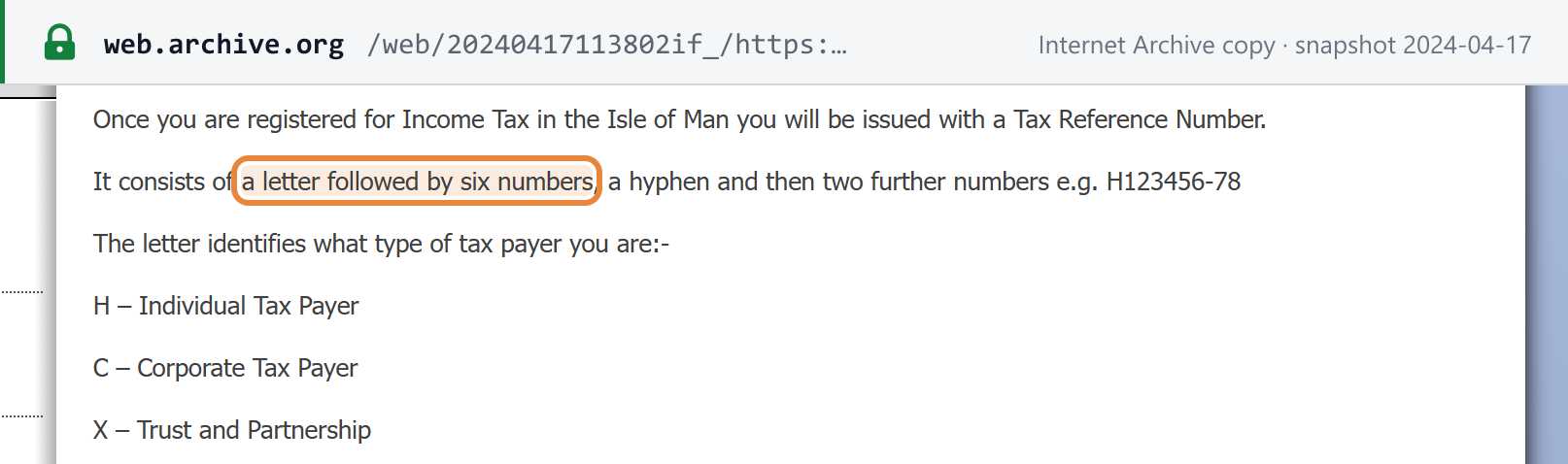
The Income Tax Division says a Tax Reference Number "consists of a letter followed by six numbers, a hyphen and then two further numbers e.g. H123456-78", with the letter identifying the type of taxpayer. [3] The Isle of Man's OECD information sheet adds that the two-digit suffix is always optional, and that the number is fixed for life and always in the same format. [2]
You'll find the number on payslips and T14 forms from an employer, on tax returns, and on documents from the Income Tax Division such as a notice of coding, a tax assessment or a payment reminder. [3]
For the Common Reporting Standard, the Tax Reference Number is the Isle of Man TIN. The OECD sheet notes that an "Isle of Man VAT Taxpayer Identification Number starting with '100-xxxx-xxx'" is not accepted for CRS purposes. [2]
Don't confuse the Manx Tax Reference Number with HMRC's "Temporary Reference Number", which HMRC also abbreviates TRN and uses for people without a National Insurance number. [4]
National Insurance Number
A NINO is two letters, six numbers and a final letter A, B, C or D — for example MA999999A. [2] Isle of Man and UK numbers are used interchangeably — a Manx-issued NINO, which starts with MA, can be used in the UK, and a UK NINO on the island [21] — so HMRC's prefix rules apply: the letters D, F, I, Q, U and V are not used in the first two positions, O is not used second, and the prefixes BG, GB, KN, NK, NT, TN and ZZ are not issued. [4]
If you move to the island from the UK, your existing National Insurance number is still valid and you do not need a Manx one. Most people who don't have one apply on form CA5400, then attend the counter with two forms of identification, one of them photographic. [5]

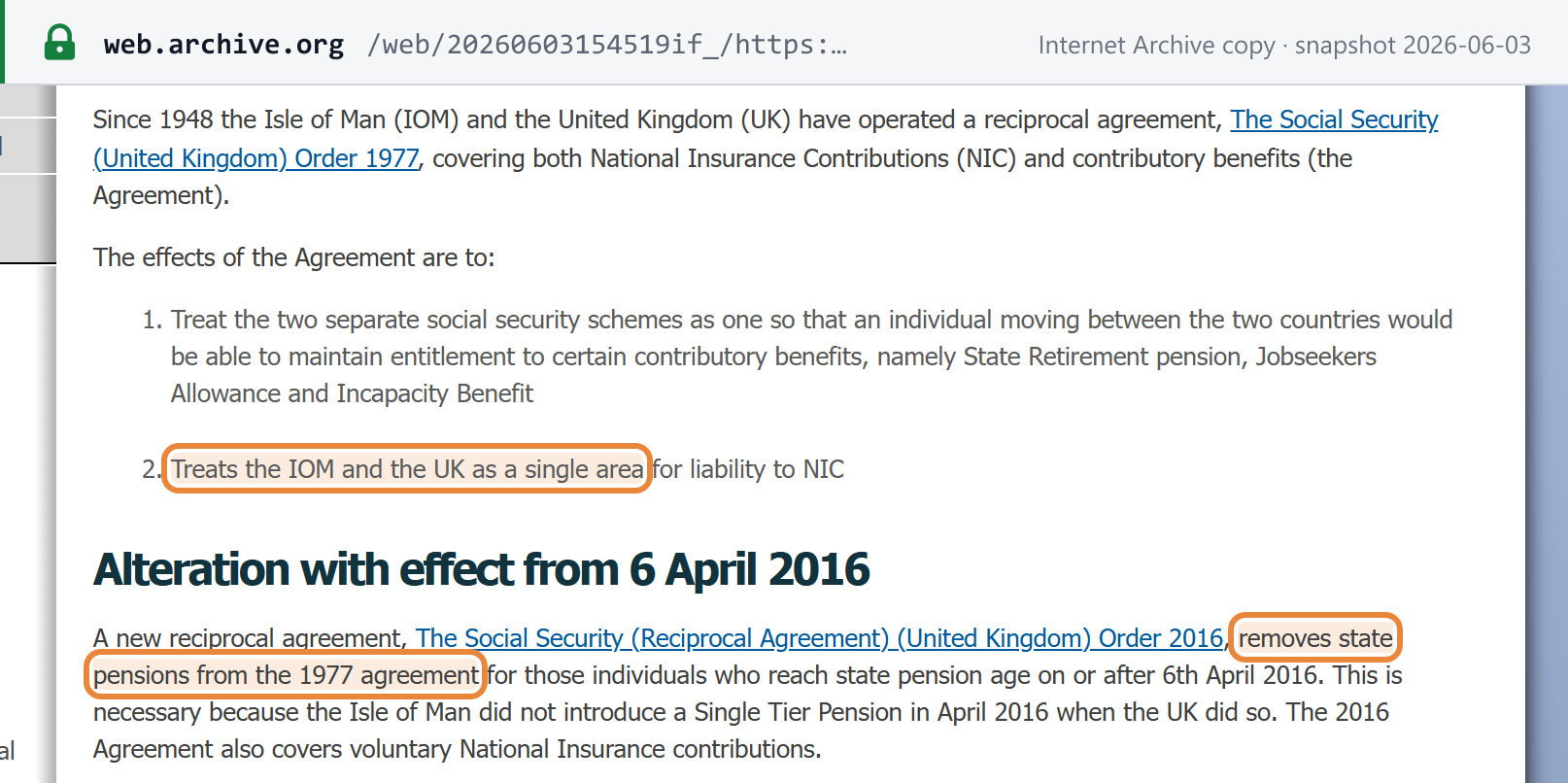
Since 1948 the Isle of Man and the UK have had a reciprocal agreement that treats them as a single area for National Insurance liability. State pensions were taken out of it for people reaching pension age on or after 6 April 2016, who now claim separately from each country. [6]
VAT Registration Number
| Field | Detail |
|---|---|
| Format | GB + 9 digits |
| How to recognise it | The first two digits are 00 |
| Issuer | Customs and Excise Division of the Isle of Man Treasury |
| Register | Separate from HMRC's UK register, same number series |
| Example | GB004925592 (Manx Technology Group, published on its own website) |
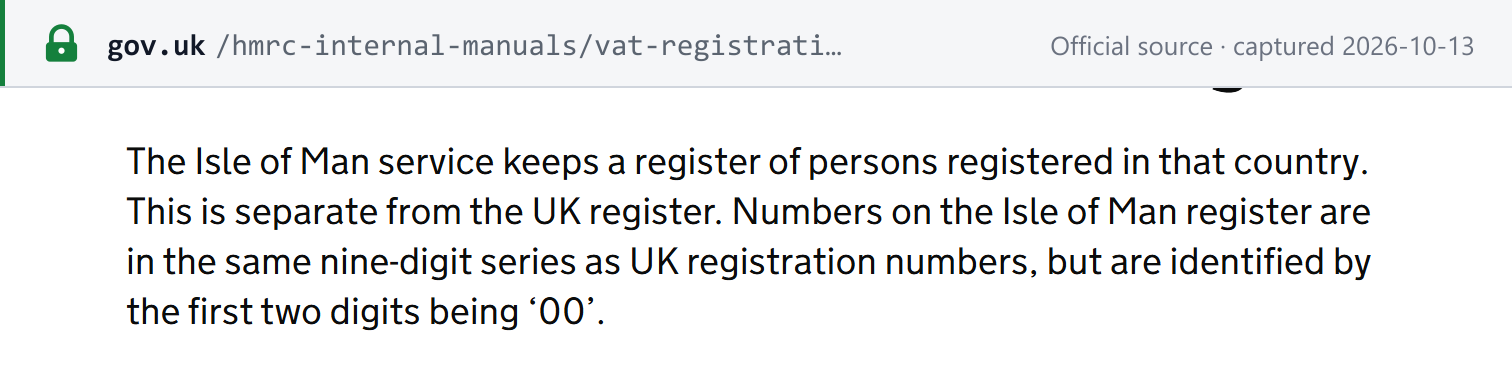
HMRC's VAT Registration Manual explains that the Isle of Man keeps its own register, separate from the UK's, and that its "Numbers on the Isle of Man register are in the same nine-digit series as UK registration numbers, but are identified by the first two digits being '00'." [7]
The two territories are a single area for VAT. On the UK side this rests on the VAT (Isle of Man) Order 1982, with corresponding Isle of Man legislation on the island. [8] Under the Customs and Excise Agreement the island generally keeps the same VAT rates as the UK, [9] although a few Manx rates differ. [18]
Company Number
The Companies Registry keeps eight registers: 1931 Act companies, 2006 Act companies, limited liability companies, foreign companies, business names, limited partnerships, industrial societies and foundations. [10] Company numbers in the register are six digits followed by a letter, and the register's search results show which register a number belongs to — for example 008505V for a 2006 Act company, 124217C for a 1931 Act company and 005057F for a foreign company. [11]
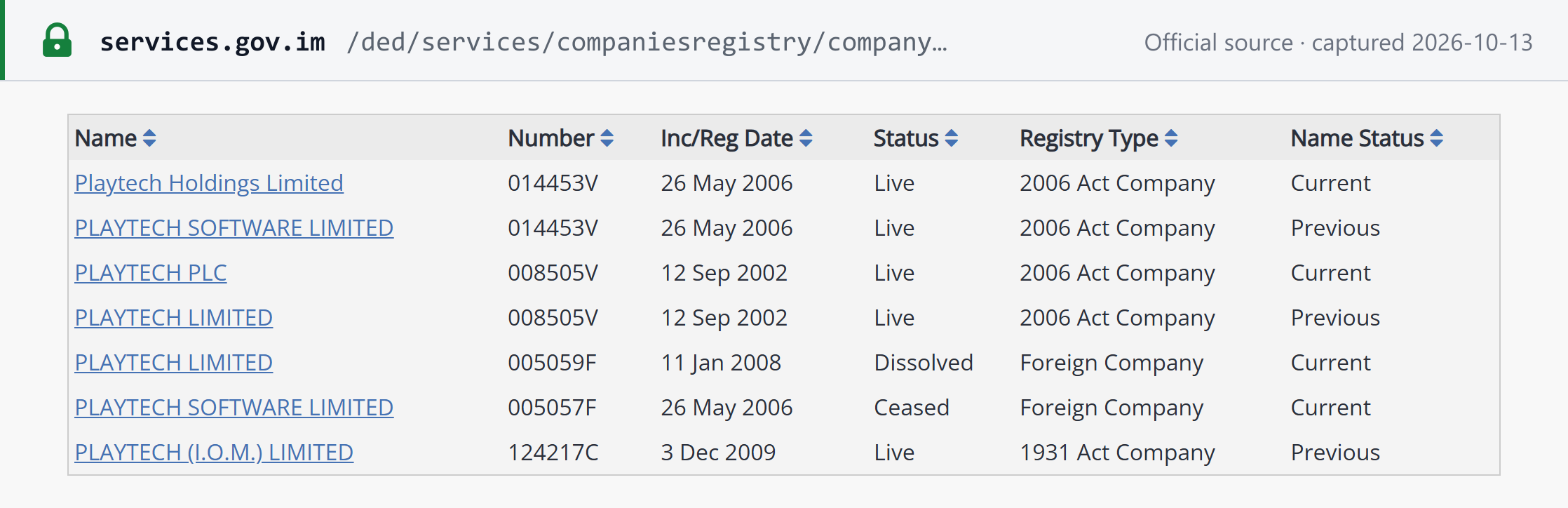
A company number ending in C (a 1931 Act company, such as 124217C) is not the same thing as a company's Tax Reference Number beginning with C (such as C222222).
Check Digit
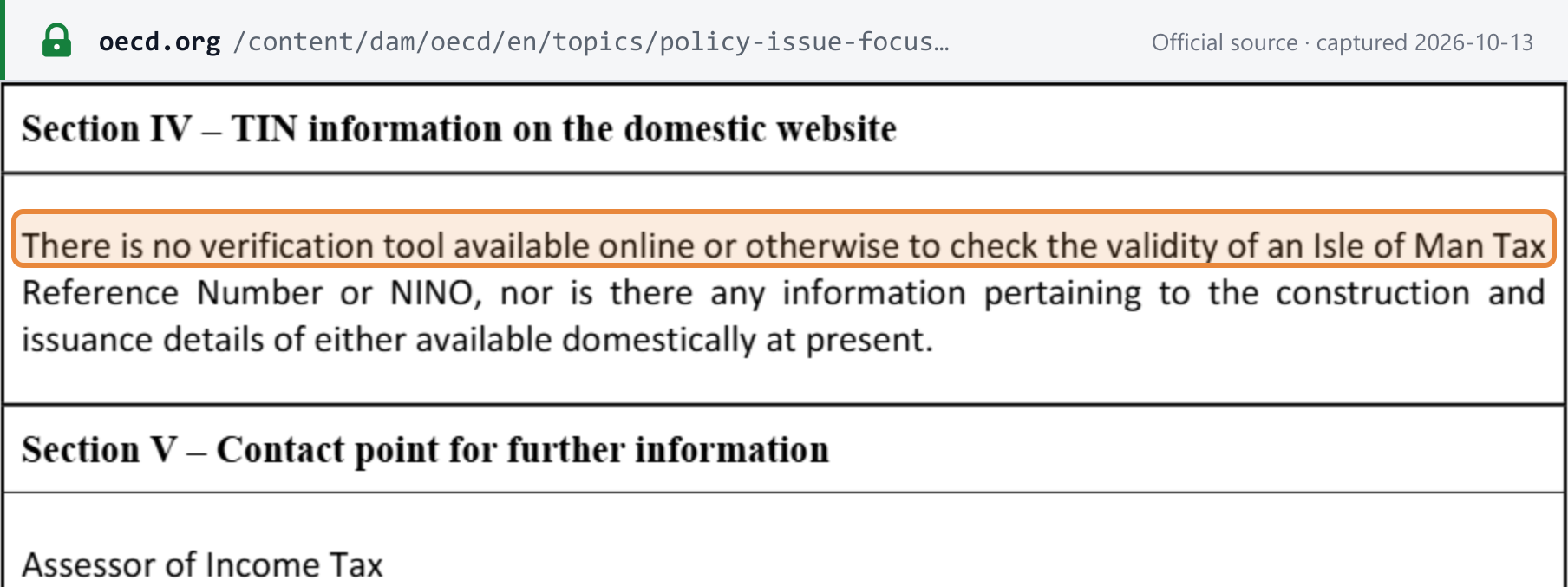
The Isle of Man publishes no check-digit rule for the Tax Reference Number or the NINO. The OECD sheet says "There is no verification tool available online or otherwise" for either, nor any published information on how they are constructed. [2] VAT numbers belong to the UK series; HMRC does not publish its check-digit algorithm, so confirm a number with HMRC's checker (below). No check-digit rule is published for company numbers.
Who Must Register
| Who | Rule |
|---|---|
| Businesses established on the island | Register for VAT when taxable supplies in the last 12 months exceed £90,000, or are expected to exceed £90,000 in the next 30 days alone |
| Voluntary deregistration | Possible when taxable turnover in the next 12 months will not exceed £88,000 |
| Businesses established only in the UK | Register in the UK, not on the island — a person is registered in one or the other, never both |
| Businesses established in neither | Usually contact HMRC's non-established taxable persons unit [12] |
| New arrivals | Register for income tax on form R25 to receive a Tax Reference Number |
| Non-residents with Isle of Man income | Liable to Manx income tax at the non-resident rate (21% for 2026/27), with no personal allowance |
The £90,000 threshold is the same as the UK's, as at October 2026. [12] [13] When testing it, supplies made in both the UK and the Isle of Man are added together. [14]

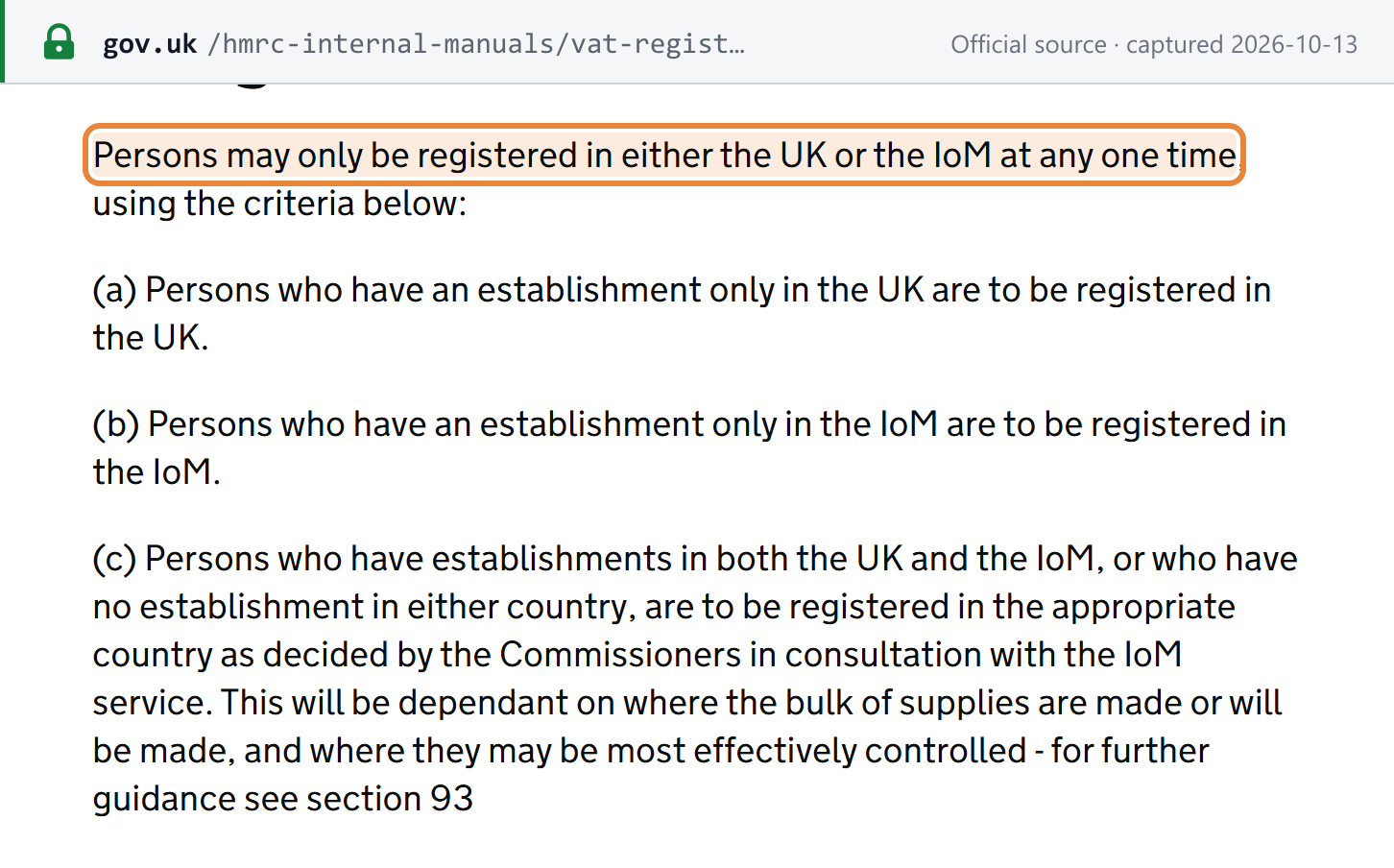
HMRC's manual sets out where a person registers: "Persons may only be registered in either the UK or the IoM at any one time". Someone established only in the UK registers in the UK, and someone established only on the island registers there. Where a business has establishments in both, or in neither, HMRC and the island's Customs decide together. [15]
For income tax, form R25 is used to decide whether you are resident; you will need two forms of identification. Non-residents with Isle of Man income still file annual returns, but only for that income. [1] The non-resident rate is 21% for 2026/27 and the non-resident allowance is £0. [16]
How to Register
- VAT: register online through gov.im Online Services, or send form VAT 1 MAN to the VAT registration team. VAT groups and partnerships must use the form. Customs aims to process applications within 10 working days, and emails a VAT registration certificate together with a separate Tax Identification Number — a Customs reference, not the GB VAT number. [12]
- Income tax: complete form R25, Registration for Manx Income Tax, and give it to the Income Tax Division. [1]
- National Insurance: apply on form CA5400 in person, unless you already have a UK number. [5]
Cross-Border Notes
- One VAT area with the UK. The UK and the Isle of Man are treated as a single area for VAT, so a UK-established business stays registered in the UK, and its supplies on the island count towards its UK turnover. [15]
- Not in VIES. The Isle of Man is outside the EU VAT system, so its numbers cannot be checked on the EU's VIES service; use HMRC's checker instead. [17]
- E-invoicing. As of 13 October 2026, the Customs and Excise Division publishes no e-invoicing requirement. [18]
- New National Insurance agreement. A new UK–Isle of Man agreement on National Insurance contributions is going through ratification in both jurisdictions. Once in force, workers moving between the two will generally pay contributions only where the work takes place, from the tax year starting on the 6 April after it enters into force. [19]
How to Verify an Isle of Man Tax ID
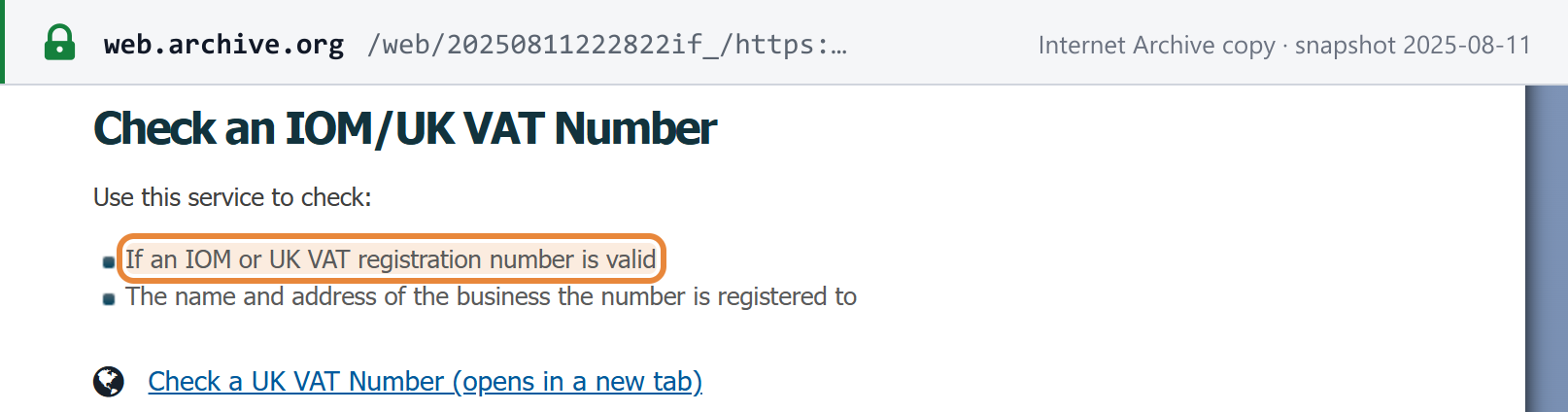
- VAT number: use HMRC's free Check a UK VAT number service. gov.im's own VAT page sends you there to check "If an IOM or UK VAT registration number is valid" and the name and address of the business it belongs to. [18] You can also check it with Lookuptax's UK VAT number validator.
- Company number: search the Companies Registry's free Find company information service, which needs no registration. It shows the company's name, number, type, status, registered office and incorporation date; copies of filed documents cost £2 each, or £15 for a company's whole file, and need an Online Services login. [20] Lookuptax's Isle of Man company number validator returns the registered name.
- Tax Reference Number and NINO: there is no lookup. Only a format check is possible. [2]
Recent Changes
- 2026-10-01 — VAT on domestic electricity falls from 5% to 0%, matching the UK under the Customs and Excise Agreement. (gov.im) — see event
- 2026-06 — New UK–Isle of Man National Insurance contributions agreement put before Tynwald; not yet in force. (gov.im)
- 2026-04-06 — 2026/27 income tax year: non-resident rate stays at 21% with no allowance. (gov.im)
Frequently Asked Questions
Can I check an Isle of Man VAT number on HMRC's "Check a UK VAT number" service?
Yes. The Isle of Man Government's VAT page directs you to HMRC's service to check whether an Isle of Man or UK VAT registration number is valid, and to see the name and address of the business. The EU's VIES service does not cover Isle of Man numbers.
How can I tell an Isle of Man VAT number from a UK one?
Both are GB followed by nine digits. Numbers on the Isle of Man register are identified by the first two digits being 00, for example GB004925592.
I'm VAT-registered in the UK. Do I also need to register on the Isle of Man?
Normally not. A person can be registered in either the UK or the Isle of Man at any one time, depending on where the business is established. A business established only in the UK stays registered in the UK, and its supplies on the island count towards its UK turnover.
What is the VAT registration threshold on the Isle of Man?
£90,000 of taxable supplies over the previous 12 months, or expected in the next 30 days alone — the same as the UK, as at October 2026. You can deregister voluntarily if turnover in the next 12 months will not exceed £88,000.
Is a company number ending in C the same as a Tax Reference Number starting with C?
No. A company number such as 124217C is issued by the Companies Registry, and the C marks a 1931 Act company. A Tax Reference Number such as C222222 is issued by the Income Tax Division, and the C marks a corporate taxpayer.
Can I verify an Isle of Man Tax Reference Number or NINO online?
No. The Isle of Man says no verification tool exists for either number, so you can only check that the format is right: a letter H, C or X plus six digits for a Tax Reference Number, and two letters, six digits and A, B, C or D for a NINO.
I'm moving from the UK. Do I need a new National Insurance number or tax number?
Keep your UK National Insurance number; it remains valid on the island. You do need to register for Manx income tax on form R25, and the Income Tax Division will issue you a Tax Reference Number.
Is the "TRN" on an HMRC letter the same as an Isle of Man Tax Reference Number?
No. HMRC uses TRN for a Temporary Reference Number given to people without a National Insurance number. The Isle of Man Tax Reference Number is a different identifier, issued by the Income Tax Division.
Related Resources
- United Kingdom TIN guide
- How to verify a UK VAT number
- Crown dependency TIN guides: Guernsey, Jersey
- Northern Ireland TIN guide
- VAT registration thresholds by country
- Worldwide directory of VAT and tax ID names by country
- Isle of Man tax changes
How Lookuptax can help you in VAT validation?
Lookuptax VAT validation revolutionizes VAT number validation with its robust platform, empowering businesses to seamlessly verify VAT numbers across over 100 countries. Our cutting-edge technology ensures accurate and efficient validation, reducing errors and enhancing compliance.