Malta TIN number guide
Identity Card Number
In Malta, Maltese nationals use their Identity Card Number as the Tax Identification Number (TIN), structured as (0000)999L, with a range from 9999999L. This TIN format comprises 8 characters, featuring:
- 7 digits
- 1 letter (M, G, A, P, L, H, B, Z)
For Maltese nationals, it's important to note that the first 4 digits can be omitted if they are 0 (zero). Additionally, in IT processing, the TIN must always be 8 characters long, ensuring that the first 0 (zero) is consistently recorded. This systematic approach guarantees accurate and standardized Tax Identification Numbers for individuals in Malta.
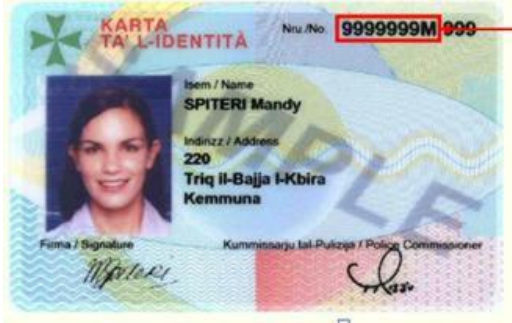 |
| ID card |
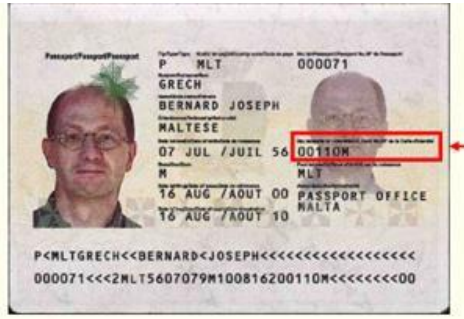 |
| Passport |
Taxpayer Reference Number
Non-Maltese nationals and entities residing in Malta for tax purposes receive a distinctive 9-digit taxpayer reference number, automatically generated by the IRD. The TIN for non-Maltese nationals is created upon submitting a completed registration form, while newly established entities registering with the Maltese Registry of Companies are automatically enrolled with the IRD.
TRN Format
The Taxpayer Reference Number consits of 9 digits Eg: 999999999
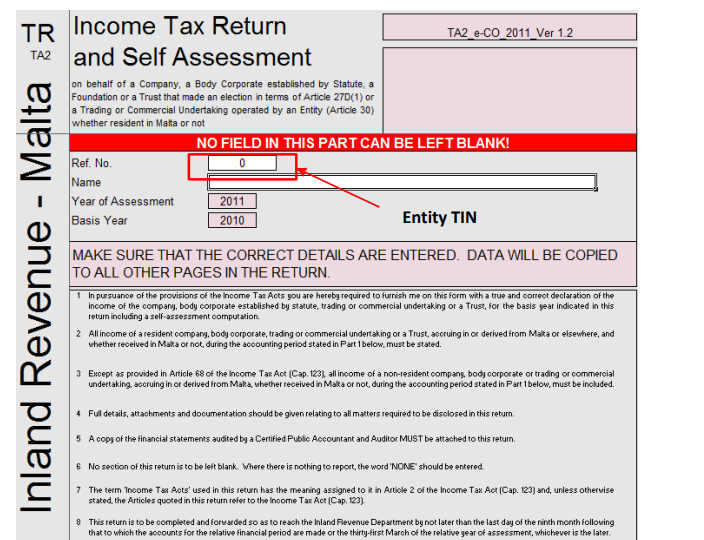 |
| Entity TIN |
VAT number
VAT number in Malta consists of 8 digits eg: MT99999999
How Lookuptax can help you in VAT validation?
Lookuptax VAT validation revolutionizes VAT number validation with its robust platform, empowering businesses to seamlessly verify VAT numbers across over 100 countries. Our cutting-edge technology ensures accurate and efficient validation, reducing errors and enhancing compliance.
Frequently Asked Questions
Does a non-resident company selling digital services into Malta need to register for VAT immediately, or is there a threshold?
There is no VAT registration threshold for non-established businesses making taxable supplies in Malta. Under the Malta VAT Act (Chapter 406), the first taxable transaction triggers an immediate registration obligation — unlike the €35,000 small-enterprise exemption that applies only to businesses established in Malta. Non-EU companies are additionally required to appoint a Malta-resident fiscal representative. The One Stop Shop (OSS) regime registered in another EU member state covers B2C digital services sold to Maltese consumers, but does not apply to B2B supplies or to non-EU operators. [1] [2]
Is it true that a Malta company pays only 5% corporate tax — and can that effective rate be denied?
The 35% corporate tax rate is paid by the Maltese company; the 5% effective rate is achieved through a 6/7ths refund claimed by the shareholder after a dividend is distributed. The refund applies only to profits distributed from the Maltese Taxed Account (MTA) or Foreign Income Account (FIA) — distributions from the Final Tax Account (FTA) or Immovable Property Account (IPA) do not qualify. Critically, foreign tax authorities in high-tax countries may challenge the structure if the company lacks genuine economic substance in Malta (active directors, local decision-making). A shell with no real Malta presence risks being reclassified as tax-resident in the shareholder's home country, negating the refund entirely. [3] [4]
How long does a shareholder actually wait to receive the 6/7ths tax refund from the CfR?
Legally, the Commissioner for Revenue must pay the refund within 14 days of the refund becoming due — which is the date the company's tax return is filed, all corporate tax has been settled, and the shareholder's refund claim form has been correctly submitted. In practice, practitioners report delays of several months when documentation is incomplete or if the company's tax return is under review. The clock only starts from the date all required documents are received and accepted by the CfR, so submitting an incomplete application resets the timeline. [5] [6]
Do Malta Nomad Residence Permit holders need to register for a TIN and file a tax return?
Yes — nomad beneficiaries who derive income chargeable to tax in Malta must register for tax purposes with the CfR, submit an annual tax return, and pay any tax due. A 12-month income tax exemption from the permit issue date applies to eligible holders (permits issued from 1 January 2024 onwards), after which a 10% flat rate applies to authorised remote-work income. The earlier confusion — where Residency Malta Agency marketed a blanket exemption that the CfR said had no legal basis — was resolved by the Nomad Residence Permits (Income Tax) Rules announced in December 2023. Holders who became tax-resident before the rules passed may have outstanding filing obligations. [7] [8]
When does Malta's participation exemption not apply to dividends received by a Maltese holding company?
The participation exemption provides a full income-tax exemption on dividends from a qualifying participating holding, but it is subject to anti-abuse conditions. The exemption is denied on dividends from a non-Maltese subsidiary unless at least one safe-harbour condition is met: the subsidiary is resident or incorporated in an EU/EEA country; or it is subject to foreign tax of at least 15%; or no more than 50% of its income is passive (interest or royalties); or the holding is not a portfolio investment and the subsidiary's passive income is taxed abroad at a minimum 5% rate. If none of these conditions applies, the dividend remains taxable in Malta at the standard 35% rate, and the company must allocate it to the correct tax account before any shareholder refund can flow. [9] [10]