Nicaragua TIN number guide
This post is also available in: Español
Taxpayer identification number (RUC)
In Nicaragua, for companies and individuals engaging in commercial activities, whether at a national or international level, it is mandatory to register in the Single Registry of Taxpayers and acquire a Taxpayer Identification Number, commonly referred to as RUC (registro único de contribuyente) in Spanish. This registration is essential not only for local operations but also for facilitating import and export activities
RUC Format
RUC consits of 14 digits eg: J1310000252297
 |
| RUC |
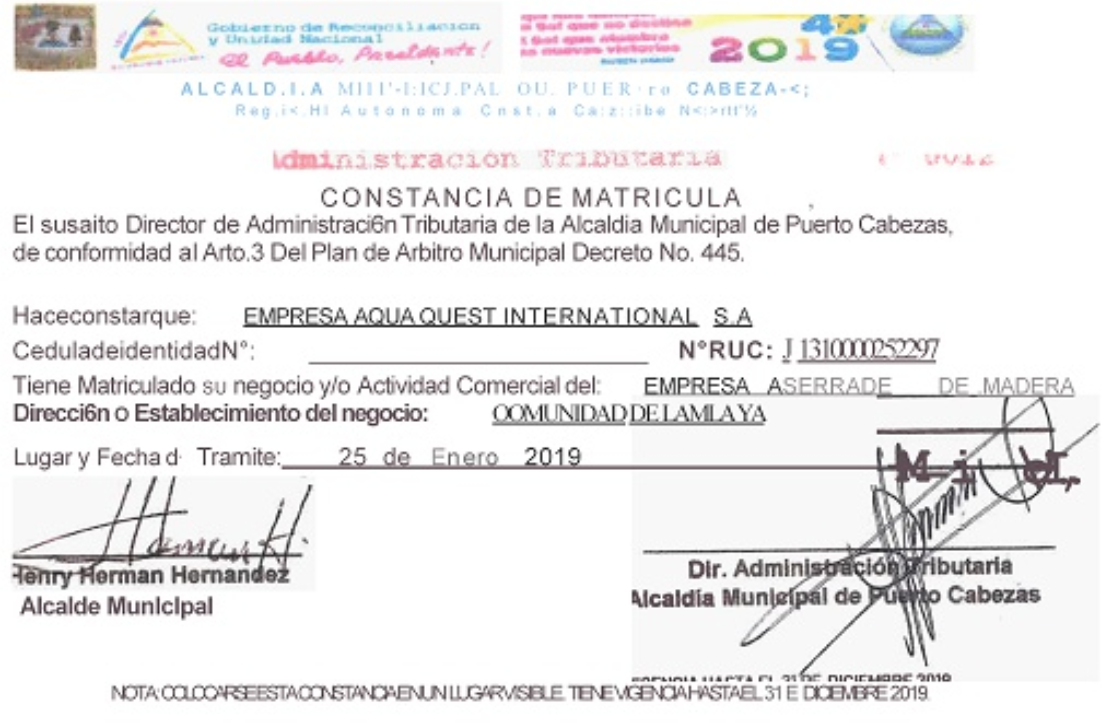 |
| RUC |
Cedula de identidad
Cedula de identidad consists of 14 digits example: 607-190468-0001F
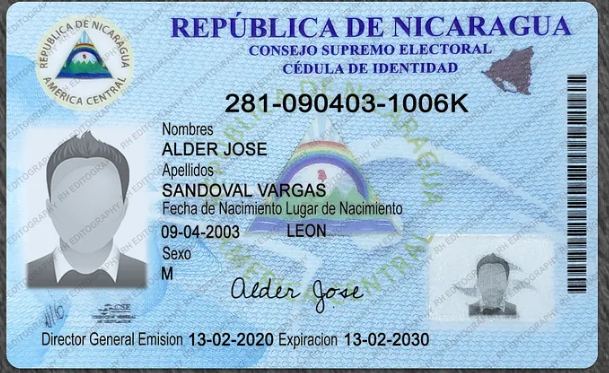 | 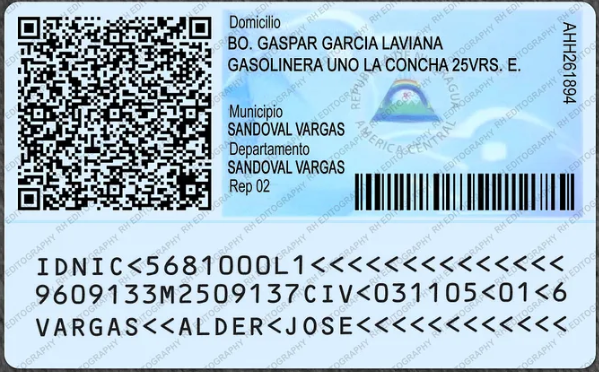 |
| Numero de Documento Nacional de Identidad | |
Frequently Asked Questions
Can a foreign company obtain a RUC in Nicaragua without first incorporating locally?
Foreign individuals or entities cannot register directly for a RUC using a home-country legal identity. To operate commercially in Nicaragua, a foreign investor must first incorporate a Sociedad Anónima (S.A.) or equivalent legal entity with the Registro Mercantil, and only then apply for the RUC with DGI. The corporation's registered representative presents the company deed, bylaws, and proof of a Nicaraguan fiscal address (utility bill or lease). Until the RUC is issued, the entity cannot issue legal invoices or import goods. [1] [2]
What withholding rates apply when a Nicaraguan company pays a foreign service provider?
Nicaragua imposes definitive withholding taxes on all payments of Nicaraguan-source income to non-residents. The standard rate for general services is 20%; dividends, interest, and royalties are subject to 15% withholding; and payments to residents of tax havens listed by DGI carry a 30% rate. Nicaragua has signed no double-taxation treaties, so these rates apply without reduction. The Nicaraguan payer is responsible for declaring and remitting the withheld amount monthly via Form IR-122. [3] [4]
What is the PMD (Pago Mínimo Definitivo) and when does it override normal income tax?
The PMD is a minimum definitive income-tax floor established under Ley de Concertación Tributaria (Ley 822). Most taxpayers pay 1% of monthly gross income as an advance; large taxpayers (GRACO, gross income above C$160 million) pay 3%, and mid-size taxpayers (PRICO) pay 2%. At year-end, if the calculated annual income tax on net profit is lower than the total PMD advances already paid, the PMD becomes the definitive tax — the difference is not refundable. This catches businesses reporting thin margins or losses who still owe meaningful tax. [5] [6]
Do companies in Nicaragua's Zonas Francas still need a RUC, and what taxes are actually exempt?
Yes — every legal entity operating in a Zona Franca must register with DGI and hold a valid RUC; the RUC is the identifier used by the Corporación Nacional de Zonas Francas (CNZFr) to administer the incentive regime. Under the 2026 reform to the Free Trade Zones Export Law, qualifying companies are exempt for 15 years (renewable indefinitely) from income tax (IR) on activities, dividend taxes, IVA on domestic purchases, municipal taxes, and import duties on machinery and inputs. Sales into the domestic Nicaraguan market, however, are taxed at standard rates. [7] [8]
What penalty applies if a taxpayer fails to update their RUC data within the two-year deadline?
Under the 2019 fiscal reforms, all taxpayers are required to update their RUC registration data with DGI every two years. Failure to update, or failure to notify DGI of changes (address, activity, legal representative) within the required period, is classified as an administrative infraction. The sanction is 30 to 50 penalty units per month of delay. Taxpayers with outstanding infractions lose access to the DGI's Ventanilla Electrónica Tributaria (VET), which blocks printing of the RUC certificate and other fiscal documents needed to invoice, import, or bid on public contracts. [9] [10]
How Lookuptax can help you in VAT validation?
Lookuptax VAT validation revolutionizes VAT number validation with its robust platform, empowering businesses to seamlessly verify VAT numbers across over 100 countries. Our cutting-edge technology ensures accurate and efficient validation, reducing errors and enhancing compliance.