Norway TIN number guide
National Identity Number (NIN)
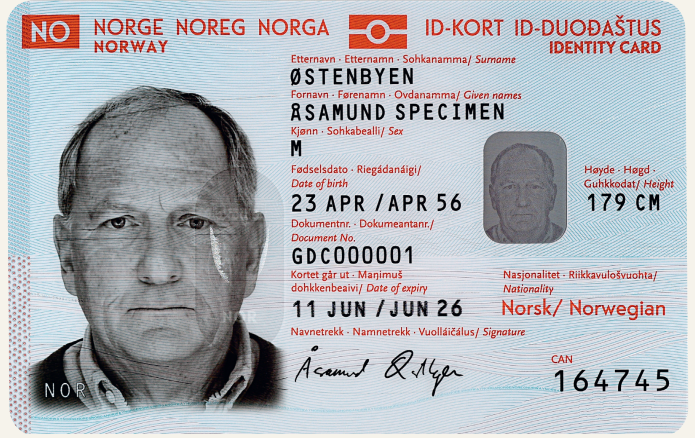
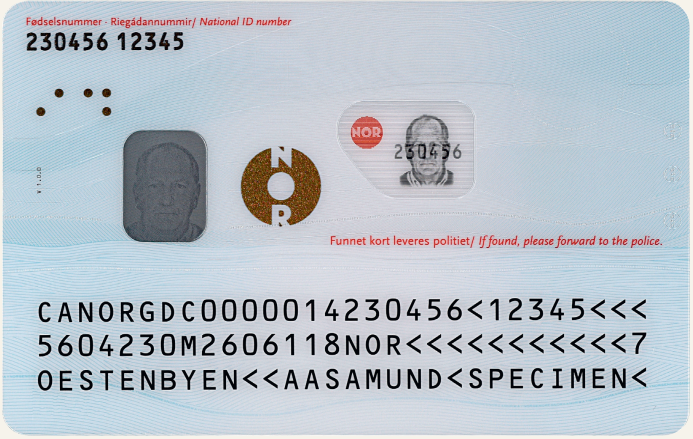
In Norway, every resident is allocated a distinct national identity number. This encompasses individuals born in Norway, those residing in the country for a minimum of 6 months, or Norwegian citizens born or living abroad requiring a national identity number for obtaining a Norwegian passport or ID-card. The national identity number comprises 11 digits, with the initial six representing the individual's date of birth. Eligible individuals receive their Norwegian national number through an official letter from the Tax Office. It is also known as "Fødselsnummer" in Norwegian
NIN Format
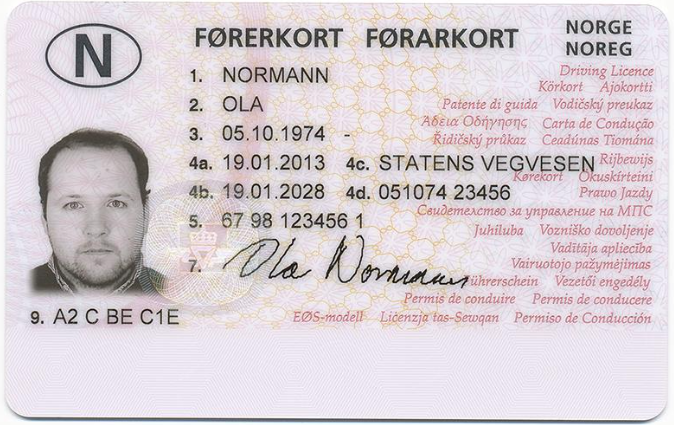
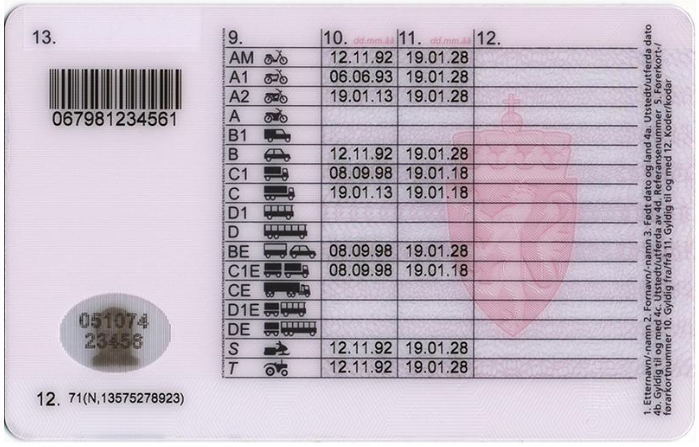
The national identity number is an 11-digit code, with the initial six digits indicating the date of birth in the format day, month, year. Following this, the subsequent three digits make up the individual number, with the third digit denoting gender – even for women and odd for men. The final two digits serve as control digits.
Allocation of the individual number's three digits follows a sequential order within the specific date of birth. The breakdown is as follows:
a) For those born between 1854-1899, digits are allocated from series 749-500. b) For individuals born between 1900-1999, digits are allocated from series 499-000. c) For those born between 1940-1999, digits are also allocated from series 999-900. d) Individuals born between 2000-2039 have digits allocated from series 999-500.
In summary, the national identity number structure includes date of birth, gender indication, and control digits, with specific digit allocation criteria based on the birth year range.
Example :01 12 99 551 31
 |  |
| ID card - Front | ID card - Back |
 |  |
| Driving License - Front | Driving License - Back |
D-number
Foreign nationals coming to Norway for short-term work or having a temporary connection to the country receive a unique identity number known as a D-number. Structurally similar to national identity numbers, D-numbers have the first digit increased by four.
These numbers are assigned when individuals require and qualify for a D-number but do not meet the criteria for a national identity number. D-numbers are often assigned in relation to requests for tax deduction cards or upon request from various authorities for different purposes.
If individuals, initially assigned a D-number, later register as residents of Norway, they can only utilize their new national identity number thereafter.
D Number Format
- The D number is composed of 11 digits.
- The first 6 digits represent the date of birth, with the first digit increased by 4. For instance, if born on 1 January 1985, the initial digits in the D number would be 410185.
- The next three digits signify individual numbers, where the third digit denotes gender – even for women and odd for men.
- The final two digits serve as a verification mechanism.
- In instances where a D number is not available for your birth date, the registration date is utilized. For example, if you applied for your D number on 15 January 2020, the initial digits in your D number would be 550185.
- Your accurate date of birth continues to be recorded in the National Population Register under the date of birth field.
Example : 410185 123 45
Organisation Number
In Norway, the Central Coordinating Register for Legal Entities is the go-to platform for registering fundamental information about legal entities. Incorporation of any legal entity mandates registration, resulting in the issuance of an organization number. This unique organization number not only serves as the identifier for the legal entity but also functions as the Tax Identification Number (TIN) for legal entities in Norway. It is known as "Organisasjonsnummer" in norwegian.
Organisation number Format The Tax Identification Number (TIN) or organization number is a crucial nine-digit identifier. Its last digit is a modulus 11 check digit. As per the Central Coordination Register's guidelines, the weighting factors are calculated from the first digit and include values such as 3, 2, 7, 6, 5, 4, 3, and 2. The digits undergo multiplication with these factors, and the product sum is divided by 11. The remainder, subtracted from 11, becomes the check digit.
For legal entities registered in the Value Added Tax Register, an additional requirement is to append the letters MVA as a suffix to the organization number.
Examples - Legal entity: 999999999, VAT registered legal entity : 999999999MVA
Official Database - Search Organisation number
To check a Norwegian VAT number, use the Norway MVA number validator. For VAT registration, rates and invoice rules, see the Norway VAT (MVA) guide; for e-invoicing, see the Norway e-invoicing guide; for dated changes, see Norway tax changes on Lookuptax.
DUF number
A DUF number serves as a registration identifier within the UDI's application system. Individuals applying for residence or protection are assigned a unique DUF number during the application process.
MVA-nummer
mva-nummer is the VAT number in Norway. MVA stand for Merverdiavgift. VAT number is the same as your organization number. When you have become VAT registered, your VAT number is the organization number followed by the letters MVA. Example: 999999999MVA
How Lookuptax can help you in VAT validation?
Lookuptax VAT validation revolutionizes VAT number validation with its robust platform, empowering businesses to seamlessly verify VAT numbers across over 100 countries. Our cutting-edge technology ensures accurate and efficient validation, reducing errors and enhancing compliance.
Frequently Asked Questions
What happens when a D-nummer goes inactive after 5 years, and how does it affect payroll?
D-numbers are automatically set to "inactive" five years after issuance or last reactivation. Once inactive, the holder cannot obtain a tax deduction card (skattekort) from Skatteetaten, and without a valid skattekort, Norwegian employers must withhold tax at the emergency rate of 50% on every salary payment. Reactivation requires a physical in-person identity check (ID-kontroll) at a Skatteetaten service centre — it cannot be done by post or online. Foreign workers who return to Norway after an absence often discover their D-number has lapsed only on their first payday. [1] [2]
Why is an organisasjonsnummer rejected as invalid when the check digit calculation yields 10?
The organisasjonsnummer uses a modulus-11 check digit calculated with weighting factors 3, 2, 7, 6, 5, 4, 3, 2 applied left to right across the first eight digits; the remainder is subtracted from 11 to give the check digit. When the result equals 10, no single digit can represent it, so the entire nine-digit number is mathematically invalid and will never be assigned by the Brønnøysund Register Centre (Brreg). Validation APIs and accounting systems that flag a number in this scenario are correct. [3] [4]
Does a foreign company need a Norwegian VAT representative to register for MVA?
Usually yes, unless it is resident in the United Kingdom or one of the EEA states Skatteetaten lists. A business with no place of business or domicile in Norway that registers in the ordinary VAT Register must do so through a representative domiciled or established in Norway, who is jointly and severally liable for filing and paying the VAT. The duty does not apply to businesses resident in the United Kingdom or in the listed EEA states — all 27 EU member states and Iceland; Liechtenstein is not listed. The statutory test is a treaty with Norway on exchanging information and assisting with the recovery of VAT. Sales to Norwegian consumers of goods valued below NOK 3,000 per item and of remotely deliverable services can instead go through the simplified VOEC scheme, which needs no representative; VOEC replaced the earlier VOES scheme for electronic services on 1 April 2020. The ordinary registration threshold is NOK 50,000 in 12 months for foreign and Norwegian businesses alike. [5] [6]
At what point must a foreign digital-services business register under Norway's VOEC scheme, and what does the NOK 50,000 threshold cover?
A non-resident supplier of electronic services (streaming, SaaS, apps, e-learning, digital downloads) to Norwegian consumers must register under the VOEC (VAT on E-Commerce) scheme once cumulative B2C sales to Norway exceed NOK 50,000 in any rolling 12-month period. The threshold applies per seller — marketplace sales count separately against the marketplace's own threshold. Once registered, sellers charge and remit Norwegian MVA at 25% quarterly; they are not entitled to deduct Norwegian input VAT. Registration is free and entirely online at skatteetaten.no/voec with no Norwegian bank account, address, or fiscal representative required. [7] [8]
Does a foreign company sending employees to Norway need its own Norwegian organisasjonsnummer, and what triggers the NUF registration obligation?
A foreign company becomes obliged to register as a Norwegian-registered foreign business (NUF — Norskregistrert utenlandsk foretak) at Brreg if it conducts commercial activity in Norway — the key triggers are: employees working in Norway for more than 30 days, construction or installation projects, or any activity generating Norwegian-taxable income. The NUF receives its own organisasjonsnummer and must then report all employee salary, benefits, and withholding tax to Skatteetaten via the monthly a-melding. Failure to register before commencing activity exposes both the foreign parent and its Norwegian-based workers to penalties and 50% emergency-rate withholding. [9] [10]